Building what matters in the AI era: A conversation with Marty Cagan
Joe Murray with Marty Cagan · 26 November 2026
Read the originalMarty Cagan of the Silicon Valley Product Group told Thoughtworks that AI-speed development exposes the real constraint in product work: deciding what is worth building.
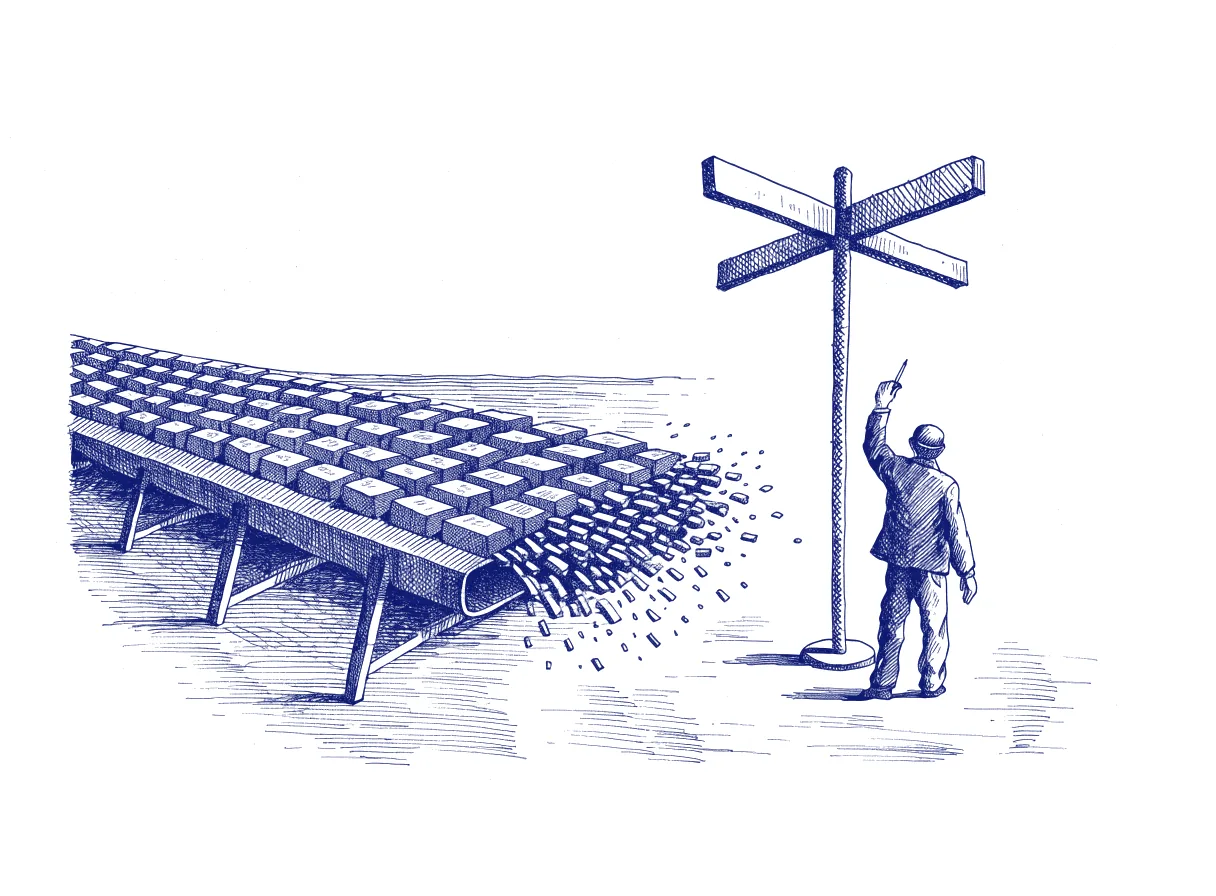
Joe Murray of Thoughtworks, a technology consultancy, interviewed Marty Cagan, founder of the Silicon Valley Product Group. They discussed why faster development with AI has not produced better products at many companies. Cagan argues that the old project model, in which stakeholders choose features and teams build them, was never limited mainly by developer speed.
- Cagan says leaders who blamed slow developers are now finding that the hard problem is choosing what to build.
- He argues that most failed products solve a real problem but offer a solution that is not clearly better than the alternatives.
- Thoughtworks gives each of Cagan's four product risks to a discipline: product strategists own value and business viability, designers own usability, and engineers own feasibility, including AI models and data.
- Cagan's suggestion for the following Monday is to set up an AI model as an always-available product coach that challenges weak ideas.
A product team that ships faster with AI agents may need explicit owners for two questions: whether customers will choose the product, and whether it works for the business. This is an inference from Cagan's argument and is not his claim. The piece is published by a consultancy that sells the cross-functional teams it describes.
Set up an AI model as a product coach that is asked to challenge weak ideas rather than only to supply answers.
Give each product risk a named owner in the team: value and business viability to product strategy, usability to design, and feasibility to engineering.
Derived by Working Surface from the article; more in the Playbook. Source line: The real problem is figuring out what to build.
27 November 2026: AI agents have made output cheap, and engineering leaders, product thinkers, a review vendor and a designer each argue that the gain now depends on writing down what good work looks like and naming who owns that standard.