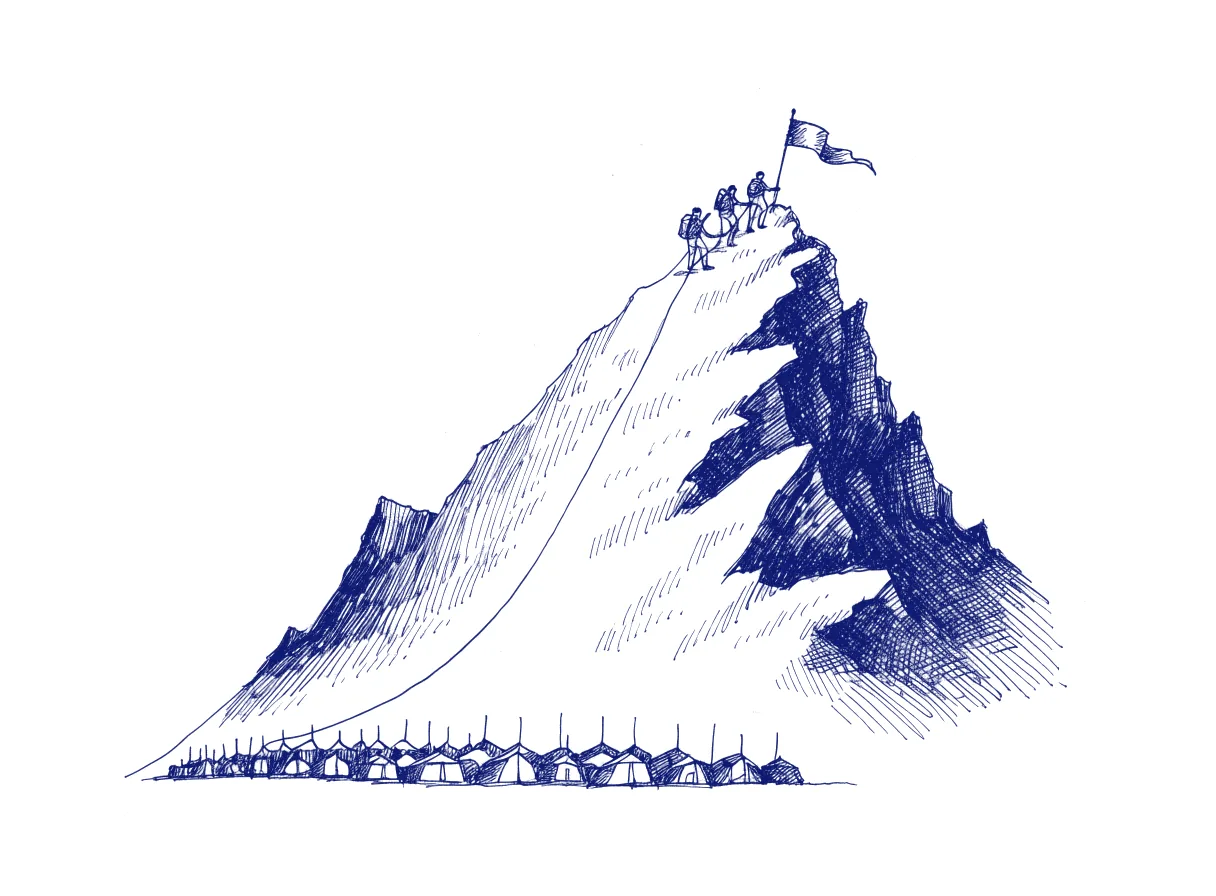
The Explorer Pattern for product invention and development.
Will Larson · 21 November 2026
Read the originalWill Larson of Imprint describes the Explorer Pattern, in which up to five people build a working feature before consulting other teams, because cheap code makes rework affordable.
Will Larson, an engineering executive at Imprint, a company that runs branded credit card programmes, wrote up how his teams start new products and features. Under what he calls the Explorer Pattern, a small group builds a working version end to end with as little effect on other teams as possible. The group reconciles the details with those teams afterwards. One engineering leader built support for Plaid, a service that connects bank accounts to other apps, this way and shipped it without a place on the roadmap.
- Larson argues that code, designs and analysis are now nearly free, so processes built to avoid engineering rework no longer fit.
- The working group has at most five people, and any project longer than about three weeks needs a named sponsor who would agree enthusiastically.
- The group posts progress in a public Linear project and Slack channel, so other teams can follow the work without being blocked by it.
- Work ships to production behind a feature flag enabled only for staff, and the group stays ready to discard it and start again.
Teams that want engineers to build before a specification is agreed can borrow Larson's conditions: a named sponsor, five people or fewer, public progress and a staff-only feature flag. Larson himself accepts that the approach can require substantial rework once other teams see the result.
Name a sponsor for any exploratory project expected to run longer than about three weeks, and post its progress in a public project and channel.
Let a group of no more than five people build a working version end to end behind a staff-only feature flag before reconciling the details with other teams.
Derived by Working Surface from the article; more in the Playbook. Source line: Writing software is extremely cheap, but it’s a wider phenomenon: generating output is effectively-free across many dimensions.
22 November 2026: as AI agents make building cheap, the check before production limits the pace, so teams are redesigning who sponsors early builds, what evidence a change must carry, how agent work is batched for testing and how much one person reviews.