How iFood scales coding agents across 15,000 repositories
OpenAI · 24 November 2026
Read the originaliFood built one shared service that runs coding AI agents for any team across 15,000 repositories, and requires every run to report success or failure in a fixed format.
iFood, a Latin American technology company, keeps more than 15,000 code repositories that each need recurring work, such as checking internal standards and fixing vulnerable dependencies. Each team had built its own way to run AI agents on this work, and all of them lacked a shared place to run the agents. Victor Coelho, a senior software engineer at iFood, describes the Remote Agents Platform his team built instead, in a customer story published by OpenAI.
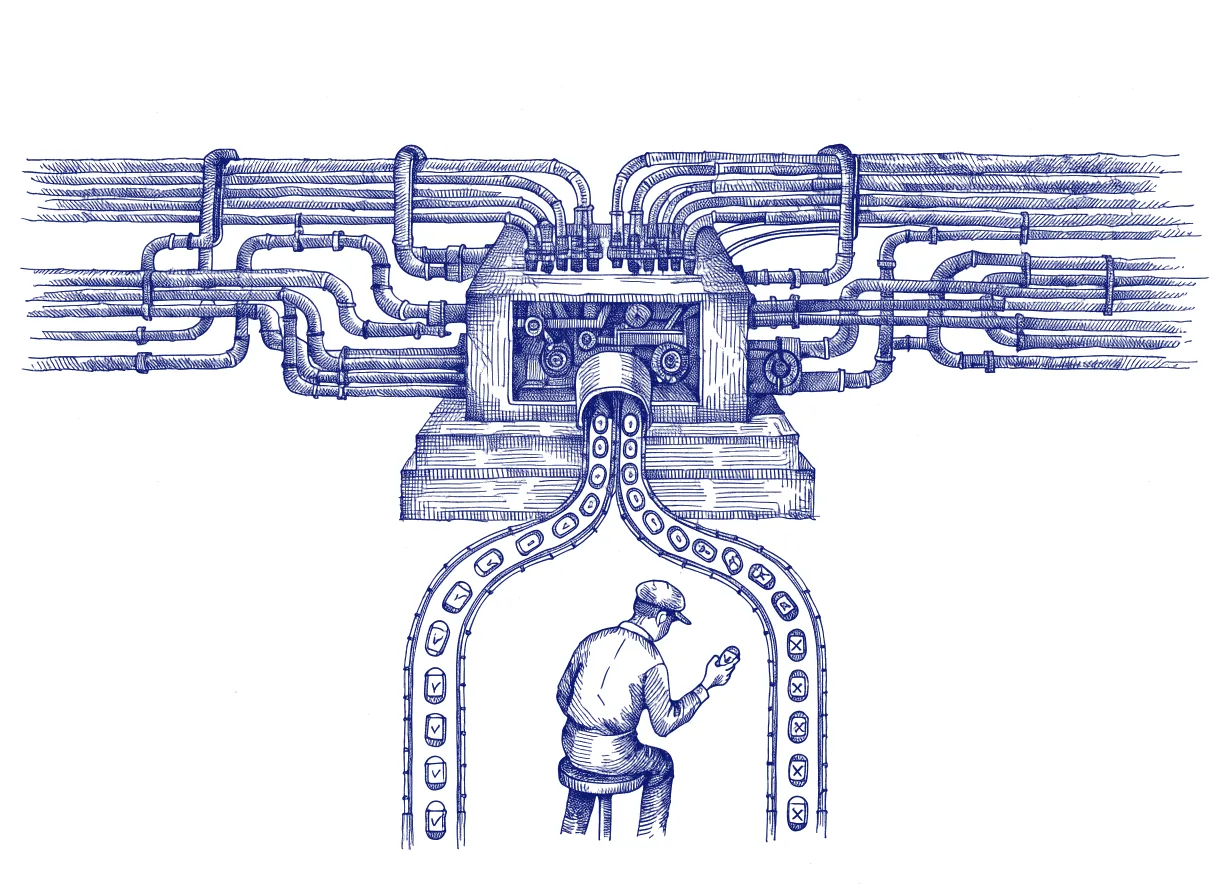
- A team sends a task and its environment needs to an internal web address; the AI agent works in an isolated sandbox and returns a merge request.
- Fixed steps at the start and end, such as copying the repository and publishing the merge request, run as ordinary scripts. Only the work in between is left to the AI agent.
- Every run must return its answer in a predefined format, so the service can sort successes from failures automatically.
- The service has completed more than 25,000 runs at an average cost of four US cents each. The security team at iFood more than doubled both the accuracy and the number of its vulnerability fixes.
A shared service owned by one team lets other teams hand routine work to AI agents without each building and watching over its own setup. That is an inference and not iFood's claim. The account is a customer story published by OpenAI, whose AI model the service uses.
Write the fixed steps of a recurring AI agent task, such as copying the repository and opening the merge request, as ordinary scripts, and leave only the work in between to the AI agent.
Require every AI agent run to return its result in a fixed format, so a script can tell success from failure without a person reading the output.
Derived by Working Surface from the article; more in the Playbook. Source line: Routine work no longer competes for the team’s attention.
25 November 2026: as AI agents produce more of the code, teams make checking automatic and write down what was decided, and people set the standard and name who approves what the checks cannot cover.