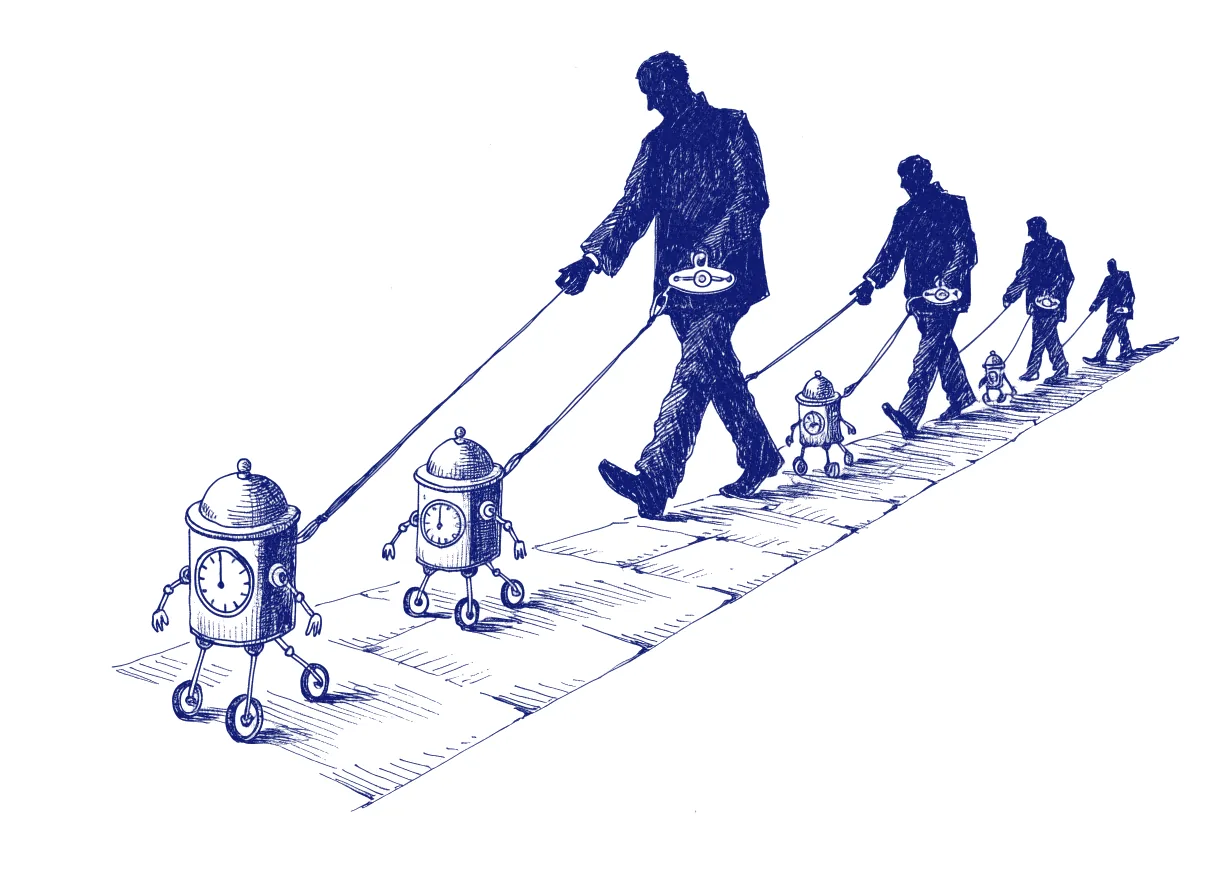
Launching the personal agent era: How we’re rolling out Autopilot at Microsoft
Alex Fleck · 19 November 2026
Read the originalMicrosoft's internal IT organisation gives each employee's always-on AI agent its own identity, a named human sponsor and no access until someone grants it.
Microsoft Digital, Microsoft's internal IT organisation, is rolling out Autopilot, an always-on personal AI agent, to employees in phases after a voluntary pilot. Each Autopilot has its own sign-in identity, mailbox and file storage, and lists its employee sponsor as its manager. This is a vendor's account of its own product, written by its IT team.
- Every Autopilot traces back to a named human sponsor and a stated business purpose, and it can be blocked without blocking that employee.
- It starts with access to nothing; the sponsor or an administrator grants each resource as the agent's work requires.
- In group chats and meetings it works under its own identity and sees only that space's context, so private material does not cross over.
- Pilot users gave it scheduling, inbox triage, meeting preparation, status reports, expense preparation, bug filing and ongoing monitoring.
A team that gives an AI agent standing work can name the person who answers for it and grant its access one resource at a time. Doing so for product and engineering agents is an inference and is not the author's claim.
Start each new AI agent with access to nothing, and grant each resource only when its work requires it.
Give every always-on AI agent its own identity, a named human sponsor and a stated business purpose.
Derived by Working Surface from the article; more in the Playbook. Source line: We don’t want autonomy to remove responsibility. Every agent user needs to be accountable to a human.
20 November 2026: as AI agents make prototypes, design tools and code cheap, the scarce work becomes a person's judgement and a named person answering for the result.