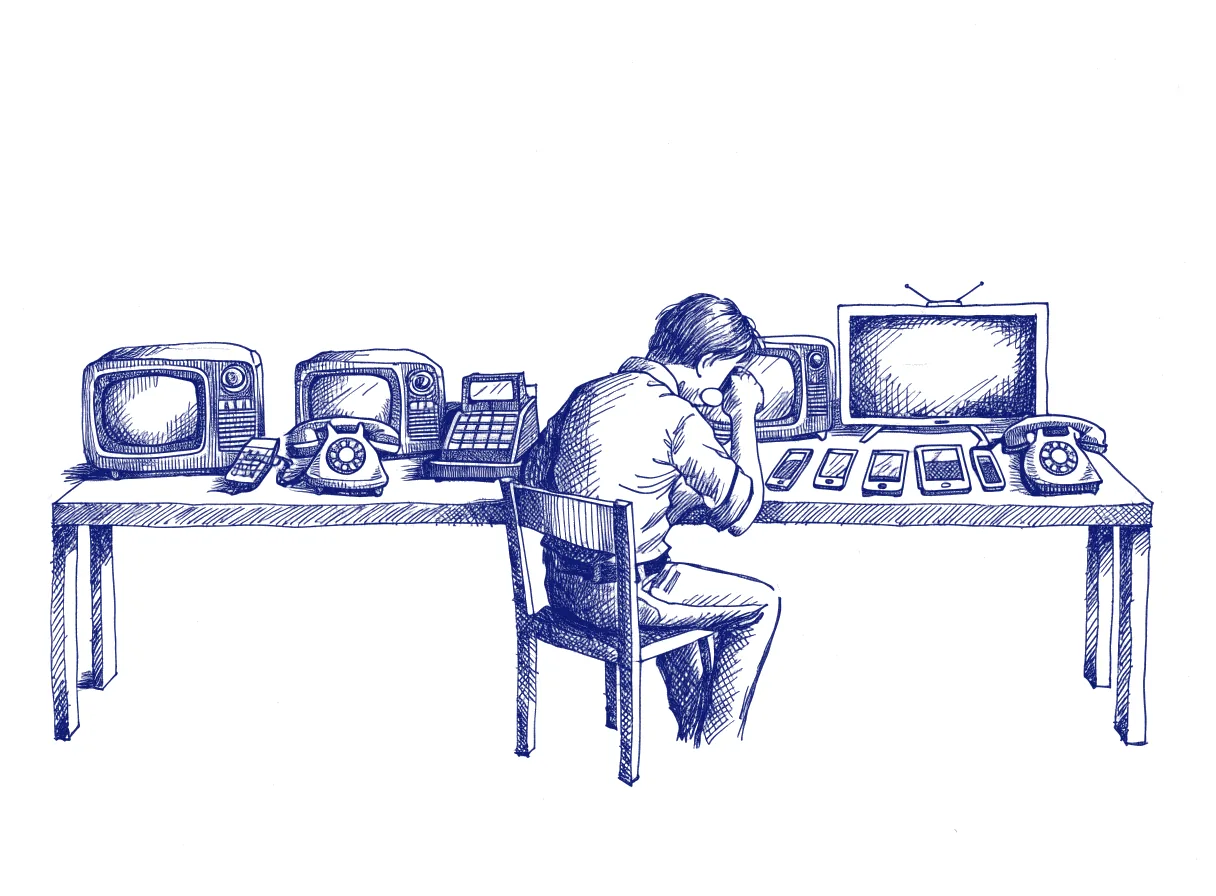
The Convergence of Design
Luke Wroblewski · 9 October 2026
Read the originalLuke Wroblewski compares decades of televisions, phones and cars to explain why designs converge, and notes that software apps are converging on chat far faster.
Luke Wroblewski, a product designer who writes about interface design, gathered historical and modern designs from several product categories. He tested a long-running complaint that design has become uniform by listing the explanations people give most often. He ends with software, where apps are already being turned into chat interfaces, and with AI hardware, which is still experimental.
- Wroblewski's first explanation is that design can step back once a product's purpose is clear, so a television becomes mostly picture.
- Mature products compete on price and specifications, so standing out is risky and costly, and the companies that try tend to stay small.
- Physical limits push forms together: aerodynamics shapes cars and planes, and airports and safety standards add further limits.
- Software converges faster than hardware: Wroblewski notes that apps are being turned into chat interfaces within a few years of ChatGPT, while hardware convergence often took decades.
A team choosing a chat interface can first write down what the user can now finish with the product. The form then follows a stated purpose. This is an inference and is not the author's claim.
12 October 2026: A familiar interface form usually follows a settled purpose, so a team should write down what the user can now finish before it adopts a common form such as chat.