Building an AI Voice Agent for 360 Degree Feedback: How Your360 AI Uses State Machines, Evals, and Layered Synthesis
Teresa Torres with Jared Goralnick, Eda Goksel Jackson and Alex Krasun · 15 October 2026
Read the originalYour360 AI replaced a single prompt with a state machine, so its voice AI coach keeps a structured feedback conversation on track while still going deep.
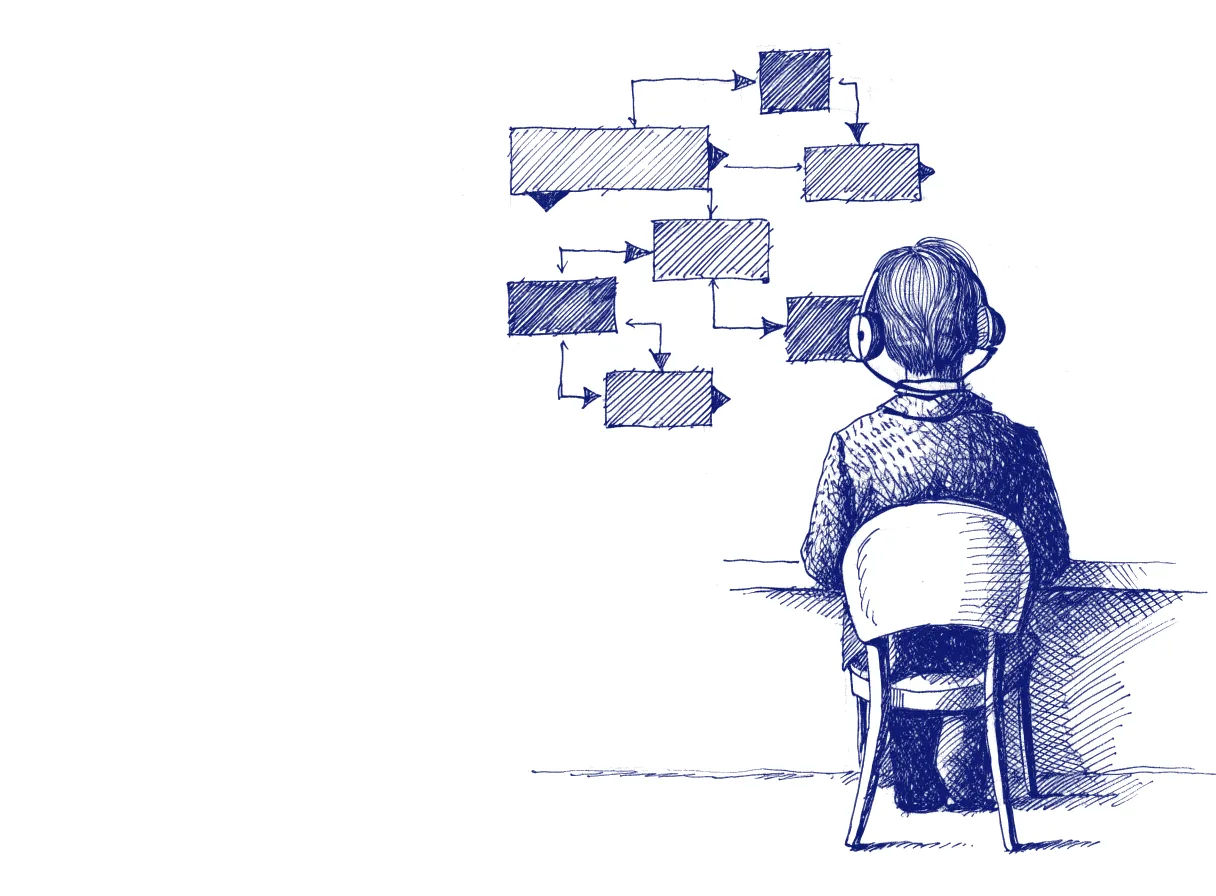
Teresa Torres of Product Talk, a site about product discovery, interviewed the team behind Your360 AI, which offers interview-based 360-degree feedback through a voice AI coach called Tam. A single prompt could not keep the coach on a structured conversation about strengths and growth areas. The team rebuilt the conversation as a state machine and built tests and review flags around it.
- A state machine, a fixed set of conversation stages with rules for moving between them, now controls when the coach moves from strengths to growth areas.
- The team turns failed calls into test personas and runs them against every change of AI model or voice provider.
- Automated flags on sentiment, customer value and product quality replace routine transcript review, so people step in only when something goes wrong.
- Critical feedback must be corroborated, and a group appears in a report only when at least three people gave feedback.
For a team building a voice or chat AI agent that must follow a set structure, explicit stages may hold that structure better than one long prompt. That is an inference and is not the authors' claim, and only the free show notes were read, as the full transcript is for paid subscribers.
Turn failed conversations into test personas, and run them again whenever the AI model or provider changes.
Split a structured AI conversation into explicit stages with rules for moving between them, instead of relying on one long prompt.
Derived by Working Surface from the article; more in the Playbook. Source line: State machines keep the agent on track while still letting it go deep when someone wants to.
16 October 2026: as AI agents produce more code and conversations than people can read, teams move routine checks to machines, keep people for narrower decisions and change what they count as progress.