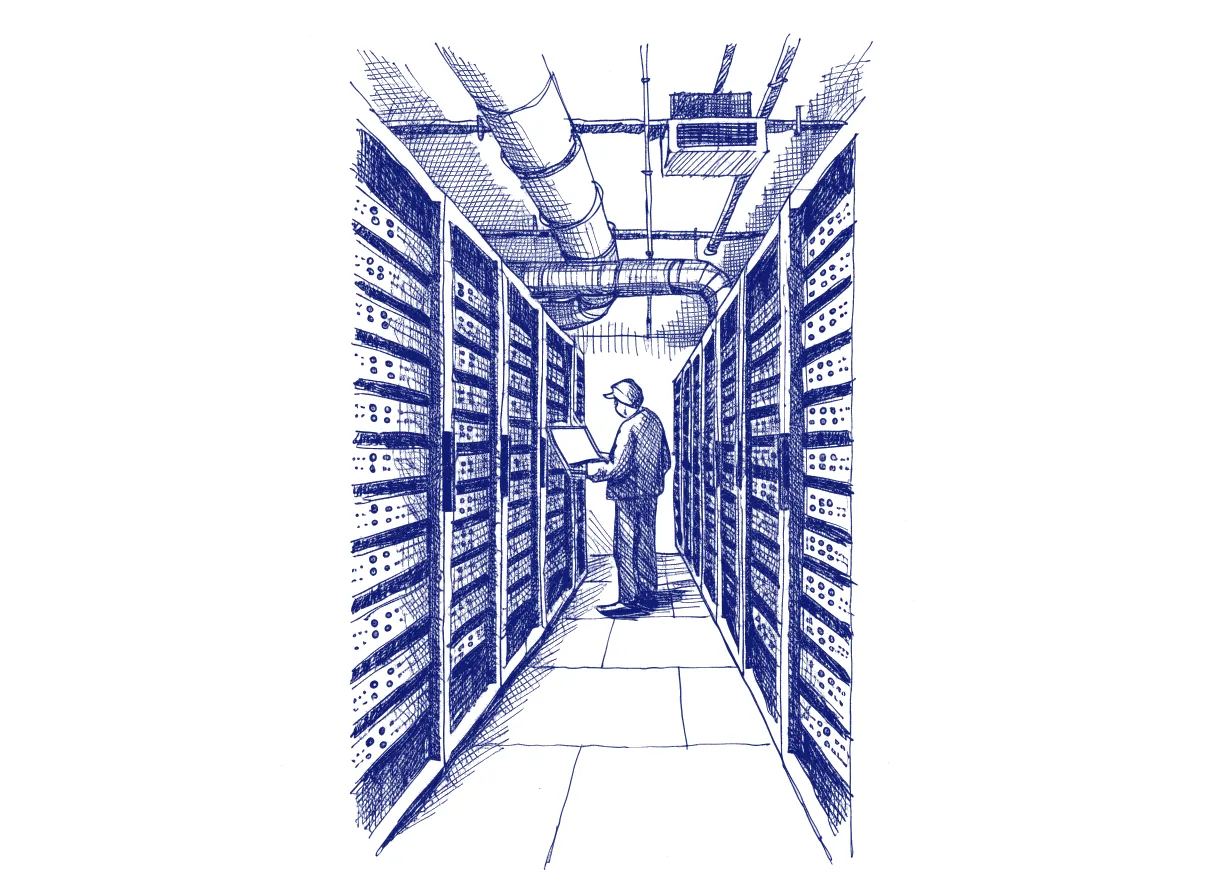
Building Git infrastructure for agent-scale development
Brian Celenza · 6 October 2026
Read the originalBrian Celenza of GitHub explains why the volume of commits from AI agents forced a rebuild of GitHub's storage, and why required reviews must survive the change.
Brian Celenza is a principal software engineer at GitHub, the code-hosting service, and works on the storage behind every repository. He writes that people and AI agents made 7.38 billion commits on GitHub in September 2026, over five times as many as a year earlier. GitHub is rebuilding its Git infrastructure while the service keeps running.
- Each repository is kept as full copies on several servers, and every copy takes part in every write, so adding copies to serve reads slows writes down.
- GitHub is separating durable storage from the servers that answer requests, and reports up to 35 times higher write throughput in internal tests.
- The busiest repositories combine large engineering teams, busy build pipelines and growing numbers of AI agents working at once.
- The post says the new design must keep branch protections and required reviews, so that an unreviewed change never reaches the default branch.
This is a vendor describing its own platform. Treating branch protection and required review as settings to confirm before AI agents raise a team's commit volume is an inference and is not the author's claim.
Require a review on the default branch so that no unreviewed change, from a person or an AI agent, can be merged.
Derived by Working Surface from the article; more in the Playbook. Source line: A maintainer needs branch protections and required reviews so an unreviewed change never reaches the default branch.
8 October 2026: as AI agents produce code and prototypes faster than people can check them, teams must decide where human checks and decisions sit instead of letting review quietly lapse.