TBM 441: AI, the Loss of Positive Friction, and What to Do About It
John Cutler · 24 September 2026
Read the originalProduct writer John Cutler argues that AI removes the manual steps where teams used to judge customer feedback, and proposes keeping every summary linked to what customers said.
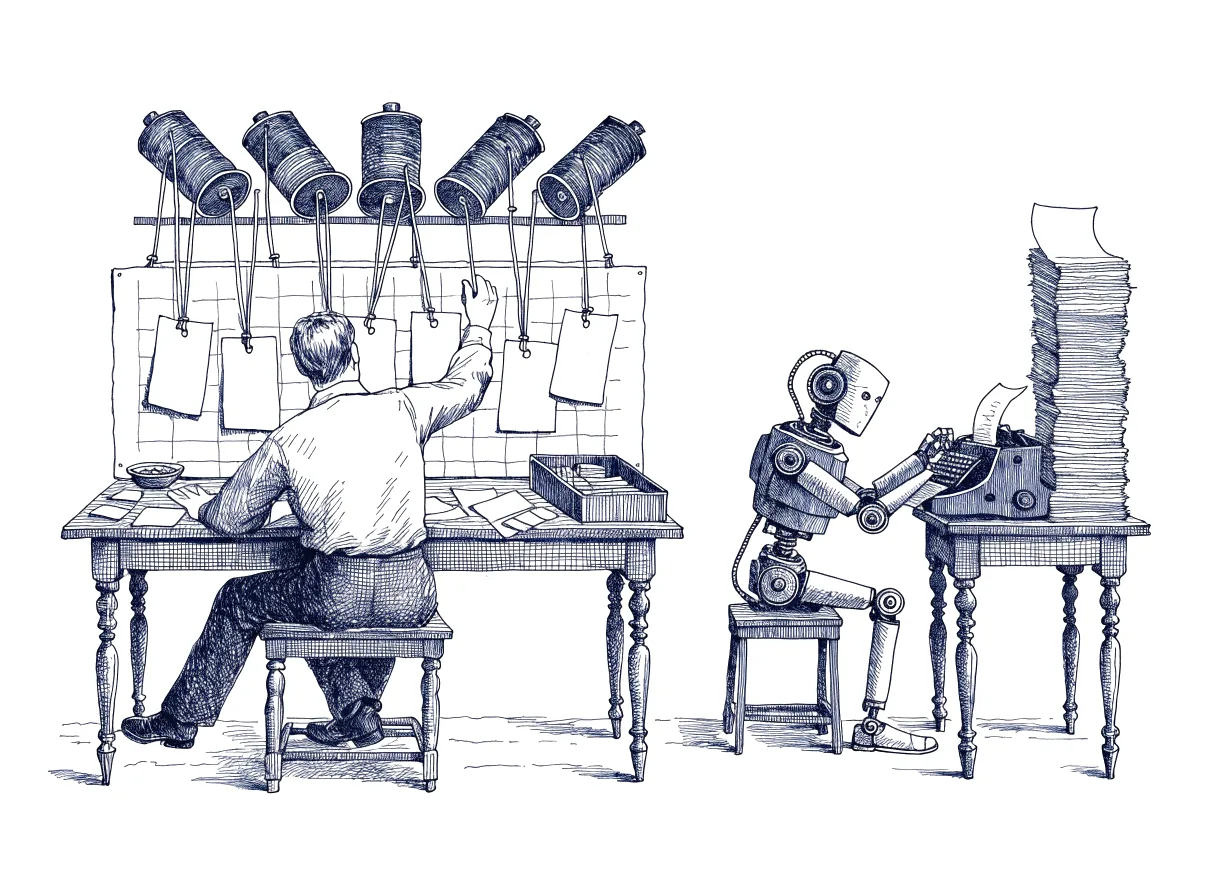
Product teams used to move customer feedback by hand: they re-read call transcripts, wrote takeaways and turned them into tickets. John Cutler, who writes the product newsletter The Beautiful Mess, argues that those steps were where people judged what mattered, and that AI agents now skip them. At his own company he found AI summaries built on other AI summaries, and he sets out principles to keep feedback traceable to its source.
- Cutler notes that AI can turn five customer calls into 80 suggested opportunities, 80 tickets and 400 tasks.
- His first principle is to keep each piece of original feedback separate and linked to its transcript. Work that cannot be traced back to a real source should stop.
- He proposes labelling every AI-generated document by how much of it AI produced, and adding a deliberate check whenever content is copied into a new context.
- He treats analysis of the code as one source of evidence, because code does not show what customers experience or whether the team is solving the right problem.
A product team that uses AI to summarise research can require every finding and ticket to link back to the original transcript. Anyone can then check it against what the customer said. Cutler offers this as a rough principle, not a tested method.
Link every synthesised finding and ticket to the transcript or feedback it came from, and stop work on any item that cannot be traced to its source.
Add a deliberate review step whenever research findings are copied into a new document, such as a ticket or a brief, and record what changed.
Derived by Working Surface from the article. Source line: The friction was judgement and discretion's friend.
27 September 2026: when AI writes part of the work, people need to see what was made, by whom and from what.