When AI agents write part of a product team's work, its reviewers and its users need to see what was made and where it came from. Five pieces published between 24 and 26 September show practical ways to make that visible.
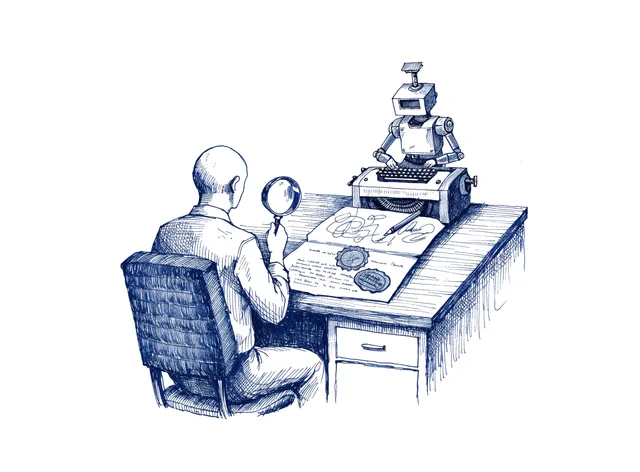
Designers at a company that makes software for clinicians write tickets for AI coding agents, and these prompts spell out every step. Engineers asked for a short human-written brief in each ticket as well. The designer who wrote the ticket then proposed labelling each section by its author, a person or the agent. The team's design lead, Leonardo De La Rocha (27 Sep · 01), explains why the label helps: a person's section may contain mistakes, and an agent's section may contain inventions. In his words, "People make mistakes and machines invent things, and knowing which one you’re reading tells you what to doubt."
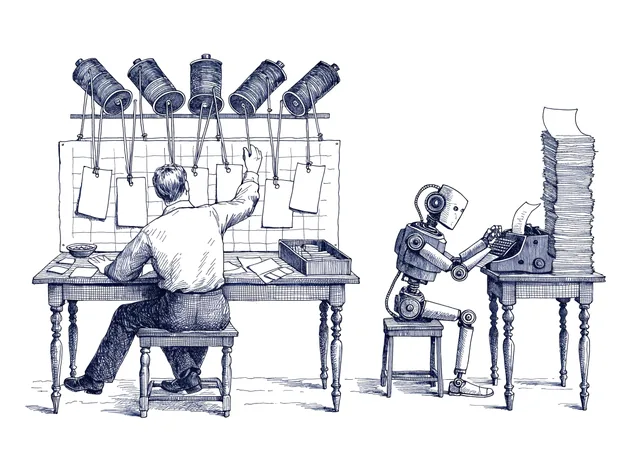
John Cutler (27 Sep · 02), who writes the product newsletter The Beautiful Mess, looks at the steps between a customer call and a shipped feature. Before AI, people re-read transcripts, wrote takeaways and turned them into tickets by hand. Cutler argues that those steps were where people judged what mattered, and that AI agents now skip them. At his own company he found AI summaries built on other AI summaries. His principles include linking every derived item back to the original feedback and labelling each document by how much of it AI produced.
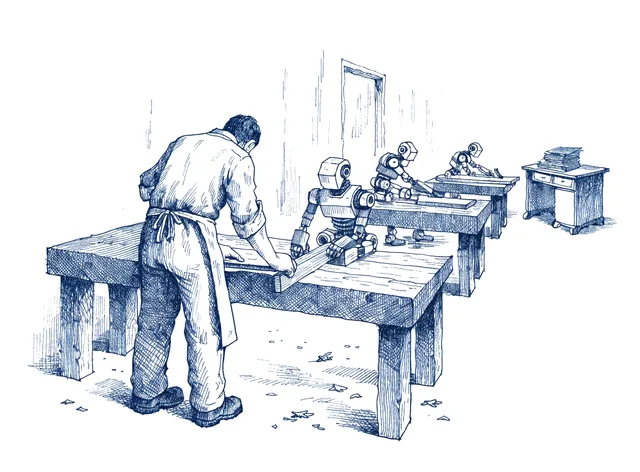
De La Rocha (27 Sep · 03) also describes a second problem. When designers, product managers and engineers can all write a polished specification in minutes, one feature ends up in three or four documents that drift apart. An AI agent builds from whichever document it is given, with no way to tell that it is out of date. He proposes one document instead: a table with one row per capability, a click-through prototype under each row and a recorded walkthrough at the top. He calls a team in which every role builds "a builder model". In his words, "In a builder model, it matters less who writes the doc and more that there’s only one."
Marty Cagan (27 Sep · 04), founder of the product consultancy Silicon Valley Product Group, writes about the push for fewer managers. Since AI changed how software is built, many companies have announced fewer managers and more hands-on builders. Cagan calls this a necessary but temporary state. He says that top product companies follow the principle that experts lead experts: whoever leads engineers, designers or product managers must be expert in that craft.
The last piece turns from reviewers to users. At De La Rocha's company (27 Sep · 05), a team shipped autosave for clinicians' patient notes, and a timestamp showed that it worked. Clinicians still told each other that they were not sure their notes were safe. The team paused the rollout on its own initiative and added an indicator that shows the save while it happens. De La Rocha now asks in every product review whether clinicians understand and trust a feature.
Each piece deals with someone who did not make the work. That person may be a reviewer reading an agent's ticket, a product manager reading a summary, an agent choosing a specification, or a clinician waiting for a save. Each answer makes the origin or the state of the work visible, through a label, a link, a single document or an indicator.
Labels, links and single documents are easy to adopt and easy to abandon, and none of these pieces shows a team keeping them for more than a few weeks.
A design team labels each part of a ticket for an AI coding agent as human-written or agent-written, so that reviewers know which kind of error to look for.
Product writer John Cutler argues that AI removes the manual steps where teams used to judge customer feedback, and proposes keeping every summary linked to what customers said.
A design lead proposes keeping one requirements document per feature, a table with a prototype under each row, so that people and AI agents build from the same version.
Marty Cagan of the product consultancy SVPG argues that the current push for fewer managers is temporary, and that each craft still needs leaders who are expert in it.
Clinicians doubted an autosave feature that worked, so the product team paused its rollout and added an indicator that shows the save while it happens.