Know What to Doubt
Leonardo De La Rocha · 26 September 2026
Read the originalA design team labels each part of a ticket for an AI coding agent as human-written or agent-written, so that reviewers know which kind of error to look for.
Designers at a company that makes software for clinicians write tickets for AI coding agents, and these prompts spell out every step. Engineers asked for a short human-written brief in each ticket as well, and the designer who wrote the ticket proposed labelling each section by its author. The team's design lead, Leonardo De La Rocha, explains that the label tells a reviewer whether to look for mistakes or for inventions.
- A prompt for a coding agent spells out every step, because the agent cannot infer anything. People find it tiring to read.
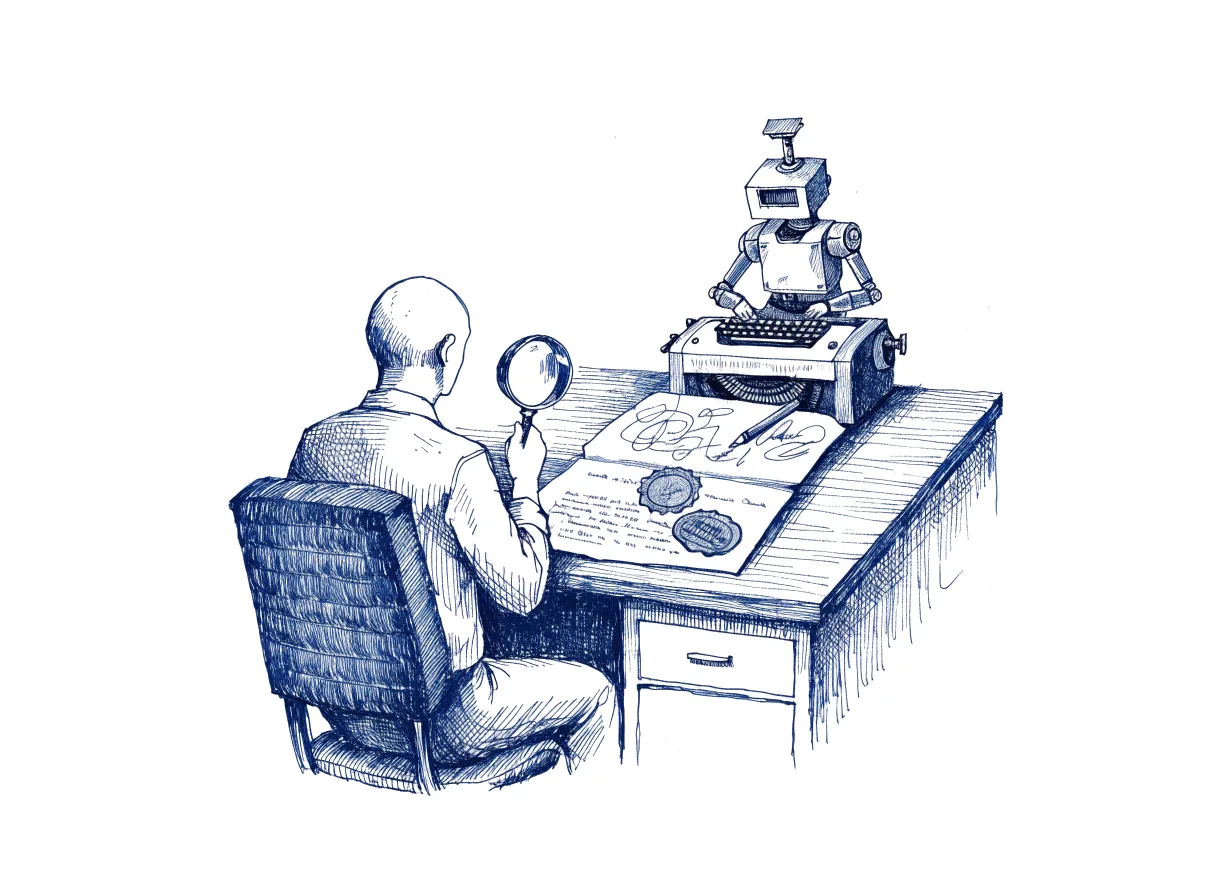
- A section written by a person may contain mistakes but should not contain inventions. A section written by the agent is the other way round.
- De La Rocha recommends a short brief at the top of each ticket, with the agent prompt below it. The brief states the problem, who it is for and what done looks like.
- He also recommends asking the agent to explain its own code change in plain words for the reviewers. Several engineers already ask a model for such a summary before they read code.
A team that hands work to coding agents can add an author label and a short human brief to each ticket, so that reviewers know what to check. De La Rocha recommends the practice to other teams himself.
Put a short human-written brief above the agent prompt in every ticket for a coding agent, and label each section as written by a person or generated by the agent.
Label each section of a design specification handed to an agent as written by a person or generated by the agent, so that reviewers know where to check for inventions.
Derived by Working Surface from the article. Source line: People make mistakes and machines invent things, and knowing which one you're reading tells you what to doubt.
27 September 2026: when AI writes part of the work, people need to see what was made, by whom and from what.