When AI agents can build almost anything, the scarce decisions are which ideas should become work and which rules the work must follow. Five accounts from 25 to 27 November show teams writing those decisions down as tickets, tests, working apps or rules, so that a person other than the builder makes them.
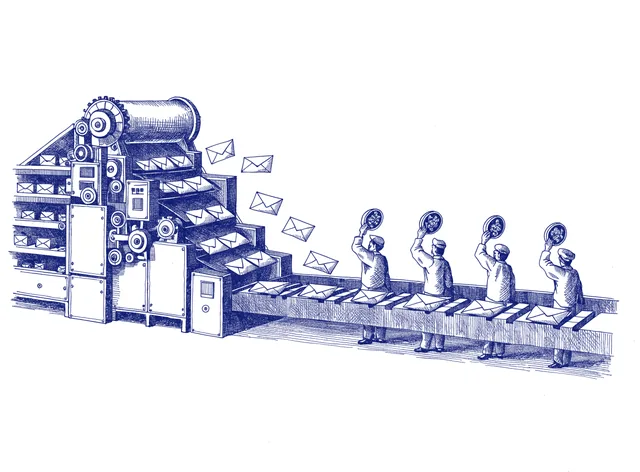
Sarath Kumar, Divyansha Jain and Surya Borusu (29 Nov · 01), a three-person team at the technology consultancy Thoughtworks, built a tool called Code Argus during an internal hackathon. Their problem is familiar to engineers on call: alerts that cost an hour of digging, uneven code review and technical debt that nobody notices. Code Argus runs inside a team's build pipeline, diagnoses a failure and proposes a fix, but it never merges a change. When a scheduled scan finds a problem, it files a ticket, and nothing is fixed until a person marks that ticket ready. The team chose this because, in its words, "unsolicited PRs are a higher-risk default than tickets".
An engineer who writes as Shimochi (29 Nov · 02), at RescueNow, a Japanese company that supplies crisis-management information, tested how to stop Claude Code adding behaviour nobody had asked for. Telling the AI agent not to add anything reduced the extras but never removed them. Asking it to put its ideas in a notes file or an issue tracker did no better, because it still wrote extra error handling into the code. Asking it to write each idea as a test marked as expected to fail produced no extra code in all three runs. The author interprets the extras as an urge to make the code correct, which only an outlet of the same form can absorb.
Cozey (29 Nov · 03), a Canadian company that sells modular sofas, lets warehouse, finance and support staff build their own apps with AI coding agents. Sam Morrison, its vice-president of digital, says a new app appears almost every week, including a live warehouse floor plan that engineering would not have prioritised. After one employee published an app that anyone on the internet could open, Morrison switched on access protection and company sign-in. His digital team then develops the apps worth taking further, starting from the working version a colleague built. The account is a customer story published by Vercel, the hosting company Cozey uses.
Jakob Nielsen (29 Nov · 04), a usability researcher who writes the UX Tigers newsletter, graded his own 2025 forecast of which design and research tasks AI would master. He now argues that AI learns a task in the order its results can be cheaply checked, so screen design arrived before usability diagnosis. Because building is cheap and checking with users is slow, he expects teams to build several different candidates first and then test to choose one. He names two jobs that stay human: deciding which problems deserve the effort, and getting a team to commit to one direction.
Nick Babich (29 Nov · 05), a product designer writing for zeroheight, a company that sells design-system documentation, describes DESIGN.md, a file format that Google developed. A design system tells an AI agent which tokens and components exist, but not when to use them or how to combine them. DESIGN.md adds short rules in plain language, such as never placing two primary buttons side by side. Babich asks for rules that change a decision. He also asks for each item under Don'ts to describe a violation that can be seen on a screen, so that the same file can review what the agent produced. He warns that a hand-kept copy goes out of date when a token changes, and advises generating the file from the design system itself.
In each account the builder, whether an AI agent, a hackathon tool or a warehouse coordinator, produces something concrete, and someone else decides what happens next. The written form matters: a ticket that waits for a label, a test that is expected to fail, or a working app that a digital team can adopt. The fifth account moves the decision earlier, to a designer who writes the rules an AI agent must follow before it draws a screen. This answers part of the open question of who turns a built artefact into planned work: a named person reads the queue, and the builder does not decide alone.
Four of the five are a hackathon project, a single engineer's experiment, a vendor's customer story and a vendor's advice on a file format. None shows such a queue or rules file holding up across a large organisation over several months.
A three-person Thoughtworks team built an AI tool for incidents and code fixes that files tickets for a person to approve and never merges its own changes.
A RescueNow engineer found that asking Claude Code to write its unrequested ideas as tests expected to fail stopped it adding extra behaviour, where a plain ban did not.
Cozey, a Canadian sofa maker, lets warehouse, finance and support staff build and deploy their own apps with AI coding agents, and its digital team develops the best ones further.
Jakob Nielsen argues that AI masters design tasks in the order their results can be cheaply checked, leaving people to choose what is worth doing.
Nick Babich of zeroheight argues that design teams should give AI agents a short DESIGN.md file saying when and how to use the design system's tokens and components.