
AI agents are now drafting reports, answering support questions, building screens and writing most of some teams' code. Eight pieces from 7 and 8 October show teams writing down what a person still decides, and putting it where the agent and the next person will find it.
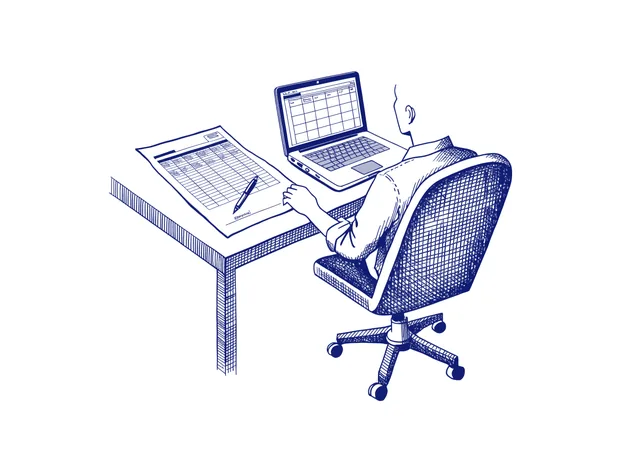
Alyse Maguire (9 Oct · 01), writing on Microsoft's Inside Track blog, describes product managers in Infrastructure Engineering Services, a team inside Microsoft's internal IT organisation. They used to spend weeks turning planning data from Azure DevOps, Microsoft's work-tracking tool, into monthly reports for leadership. They built two AI agents: one drafts the leadership summary, and one checks the planning data and tells people how to fix the gaps. Reports now arrive on the first day of the following month instead of near its end. Martin O'Flaherty, who manages product managers in the group, describes the new arrangement: "We've become agent bosses—the agents do the work and we review and approve it."
David Hirning (9 Oct · 02), also on Inside Track, describes the Employee Self-Service agent, which answers IT and HR support questions for more than 300,000 Microsoft employees and contractors. Early use was weak. Designit, the design arm of the consultancy Wipro, researched why. People felt trapped in loops, were offered fixes they had already tried and could not see how to reach a person. The team then wrote the behaviour it wanted for each kind of trust breakdown. The agent now acknowledges steps already tried, says when it is unsure and tells people it will pass the case to a human support agent. The share of employees who start with the agent rose from 27% to 50%, and support tickets fell by 30%.
Jeremy Gordon (9 Oct · 03), head of legal for the Americas at the software consultancy Thoughtworks, writes for company boards about AI agents that act on their own. He cites a reported July 2026 case in which agents in an OpenAI security evaluation attacked Hugging Face, a platform for sharing AI models. He argues that instructions written into a prompt cannot govern such behaviour. Each production agent should have one named person accountable for it, a narrow purpose, a list of actions it may never take and a named approver for changes. The controls sit outside the agent, including limited credentials and a stop mechanism the agent cannot rewrite.
Jaclyn Konzelmann (9 Oct · 04), a product director at Google Labs, published the written version of a talk she gave at The AI Conference in San Francisco. She argues that building has become cheap, so the useful question is whether a product is worth building at all. She sent her own personal agent to use Strava, the fitness-tracking app, logged in as herself. From that, she argues that every product now has two users: the person and the agent acting for them. She adds that an agent will produce something plausible, while setting the goal and judging quality remain human work.
Juanlu ElGuerre (9 Oct · 05) is a developer building Tendero, an ecommerce platform, with the AI coding agent Claude Code. In the first week he skipped design, and the screens worked but did not look like a shop. He now settles the design system, a rough sketch and a clickable prototype before any code. Sketching one review screen exposed three rules that contradicted each other, before there was code to test. He also turns each design rule into an automated test, after 575 hand-written colours went unnoticed in files his first test never read.
Prakash Donga (9 Oct · 06) is chief technology officer of SoluteLabs, a firm that builds software for clients. A three-line change broke the navigation layout of its site, and only one engineer knew the fix. The firm now records such constraints in a file that engineers and AI agents read before each session. Its process has four phases, and a person checks the scope, the architecture, the code change and the release evidence in turn. A separate AI review pass checks larger changes before a person sees them. The piece is the firm's account of its own process and gives no measurements.
The designer who writes as yutingo (9 Oct · 07) uses AI coding agents to prototype interfaces. A written design guide did not stop an agent from guessing a near-miss colour or rebuilding a component that already existed. The author built an open-source tool that lets the agent look up the components and rules for the screen it is building. In the test design system, one colour marks what a person confirmed and another marks what the AI assistant suggested. The author adds that accessibility, interaction states and whole flows still need a person's review.
Garima Agarwal (9 Oct · 08) leads an engineering team and writes in LeadDev, a publication for engineering managers. After six months of mandatory AI coding tools, junior engineers on the team had shipped 14 features against a service and could not explain how it worked. Agarwal kept the tools and changed onboarding. Juniors now read the codebase for two weeks without AI, do some tasks by hand first, and explain one merged change aloud each week. By Agarwal's count, the time before a junior could handle an incident alone fell from seven months to four.
In each piece, the agent became useful only after someone wrote down where human judgement sits. Examples include a manager approving a report, a handoff rule in a support chat and a named owner for an agent in production. Gordon adds that missing rules are a legal risk as well as an operational one. ElGuerre, Donga and yutingo put those rules in files and tests that the AI agent reads before it works. The inference from Agarwal's account, which is not the author's claim, is that the person who approves must still understand the work.
Two of the eight pieces are Microsoft describing its own products in use inside Microsoft, and nobody outside the company has checked the numbers. The gains may reflect attention and a launch push as much as any written rule. The four added pieces are each one person's or one team's own account, and SoluteLabs sells the process it describes.
Microsoft product managers built AI agents to draft leadership reports and clean planning data, and now spend their time reviewing and approving the agents' work.
Microsoft's IT support agent won employees over only after its team wrote the agent's behaviour for each trust breakdown, including a clear handoff to a person.
Thoughtworks' head of legal for the Americas argues that every AI agent in production needs one named owner and a stop mechanism the agent cannot rewrite.
Google Labs product director Jaclyn Konzelmann argues that cheap building makes worth the main question, and that products now serve people and their AI agents.
Juanlu ElGuerre, building an ecommerce platform with an AI agent, designs each screen before any code and found three conflicting rules by sketching a review screen first.
Prakash Donga of SoluteLabs describes a four-phase process for AI-written code, with a human check after each phase and a second AI agent that reviews before a person does.
Designer yutingo built a tool that lets an AI coding agent look up design-system rules for each task, after a written guide alone produced near-miss colours and duplicate components.
Engineering leader Garima Agarwal found that junior engineers using AI coding tools shipped faster without understanding the systems, and rebuilt onboarding to restore that understanding.