

Teams that hand work to AI agents are deciding where human judgement now sits and how to stop it thinning out. Four write-ups from the past week show that judgement being written down for agents, kept close to junior engineers, and made visible to the people who approve the work.
At Meta, the company behind Facebook and Instagram, finding code that wastes computing power across its servers used to depend on a few senior performance engineers working by hand. Tommy Tran (6 Oct · 01), a software engineer there, told Bill Doerrfeld of LeadDev how he built an internal platform of AI agents to do that investigation. He sat with the senior engineers and wrote down how they reason: the checks they run, the signals they trust and the order they investigate in. Those notes became agent skills, which are written instructions kept apart from the stable tools the agents use to read and change systems. Diagnosis time fell from about 10 hours to about 30 minutes, and a human engineer still approves any change that reaches production.
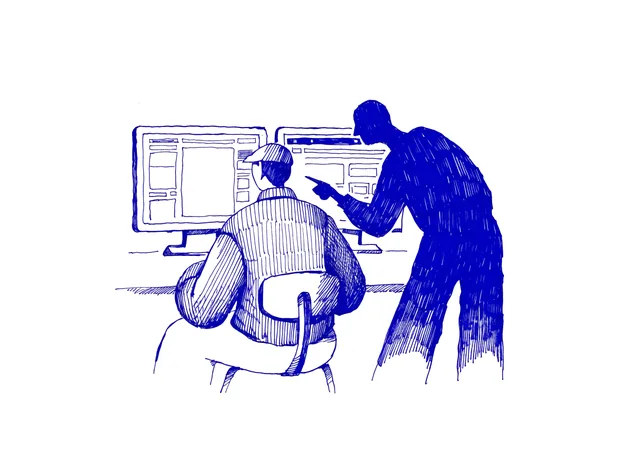
Researchers at the University of New South Wales gave 55 students three programming tasks, with either ChatGPT or ordinary web search. Chris Stokel-Walker reports for LeadDev (6 Oct · 02) that the students using AI scored 89 percent against 69 percent, yet two days later remembered less, scoring 39 percent against 52 percent. Adrian Harwood, head of research software engineering at the University of Manchester, says no junior in his department works on a project alone. Senior engineers review their pull requests, including code written with AI, and part of a junior's training is now learning "how to police the tool". The study is small and covered students, not working teams, and the article says so.
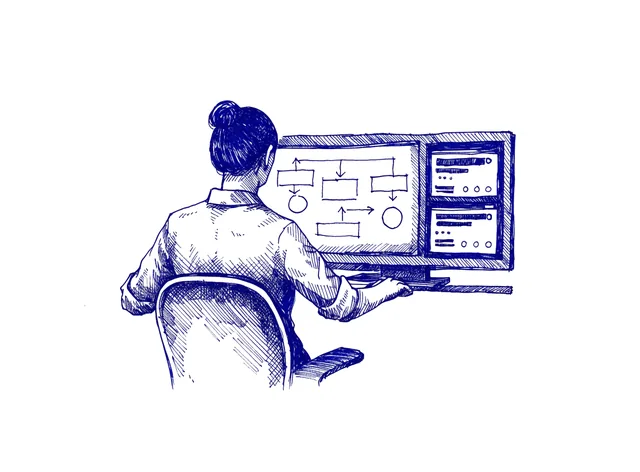
Luke Wroblewski (6 Oct · 03), a product designer who works on Intent, a tool for coordinating many AI agents at once, explained one interface decision. When agents manage other agents, a chat thread no longer shows what each one plans or has done. His team therefore lets agents write shared notes: diagrams of the plan before work starts, and before-and-after screenshots of interface changes placed side by side. A person can judge a visual change without reading code, and the design system sits in a note that people and agents both read. This is a vendor describing its own product.
QuantumBlack, AI by McKinsey, the consultancy's AI arm, moved one product's whole interface onto its own design system: 21 pages, 13 modals and about 96 supporting components. Natalia Kurakina (6 Oct · 04) describes the set-up. A front-end engineer gives Claude Code, an AI coding agent, the pull request, a screenshot, the target Figma design and a skill that packages the design system. The engineer tells the agent to ask when something is not trivial. On one page it listed two gaps in the design, compared the options with pages already moved, and waited for a two-line answer. People still check interaction states, confirm that existing functions survived, sort test failures and review every change before merge.
In each case, the people with judgement stayed close to the agent work instead of stepping away from it. Meta wrote senior reasoning into skills, Manchester kept juniors next to reviewers, and Intent and QuantumBlack built ways for a person to see and answer what an agent is doing. The inference, which is not any author's claim, is that the scarce work is now writing judgement down and keeping a named person able to apply it.
Three of the four pieces come from organisations describing their own systems, and the one independent study covered 55 students in a classroom. The reported gains may describe well-resourced teams with senior experts to spare more than a typical product team.
Meta engineer Tommy Tran wrote senior performance engineers' reasoning into AI agent skills, cutting diagnosis time from hours to minutes while people still approve production changes.
A small Australian study found students coding with AI scored higher but remembered less, and a Manchester engineering head responds by never letting junior engineers work alone.
Luke Wroblewski explains why Intent, a tool for coordinating AI agents, lets agents draw their plans and show before-and-after screenshots so people can judge work without reading code.
QuantumBlack moved a product's whole interface onto its design system with an AI coding agent that was told to stop and ask whenever the design left gaps.