The settings an AI agent runs on, the options a team drops and the files an AI can open all shape the result before anyone decides anything. Three pieces argue that these inputs need to be looked after and kept in view. Two engineering pieces from the same day look at how AI tools change an engineering manager's job and how a large embedded-software company plans to reorganise around AI agents.
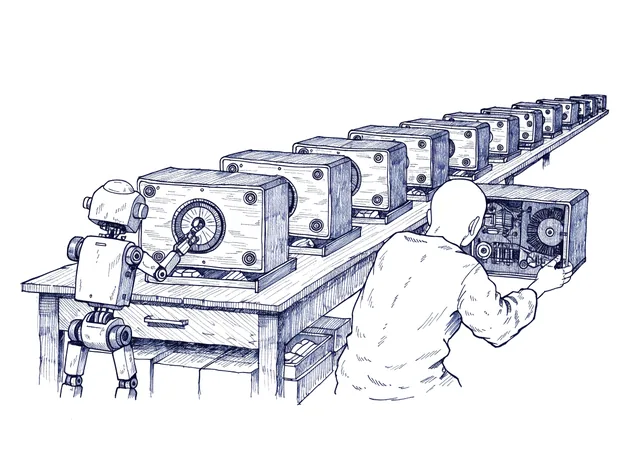
Jakob Nielsen (25 Sep · 01), a usability researcher, reviewed the evidence that most people keep whatever setting a product ships with. In one study of Microsoft Word users, fewer than 5 percent had changed any setting, so most worked with autosave switched off. Nielsen then turns to AI agents, whose defaults sit in the vendor's instructions, in the model's training and in skill files, the reusable instructions for a type of task. Nobody sees those defaults when they take effect, and an instruction written months ago can still govern today's work. His conclusion: "Skills therefore need an owner, a version, and a review whenever the task or model changes."
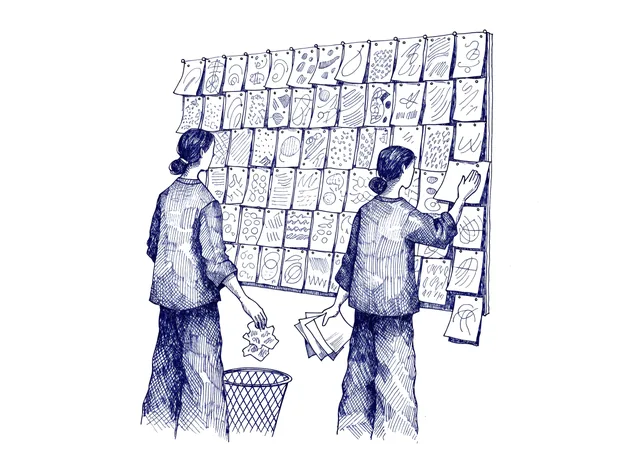
Petra Wille (25 Sep · 02) and Teresa Torres host the product podcast All Things Product. In one episode they discuss Wille's way of recording rejected work: a trash can drawn on the team's planning boards. The team puts in it each customer problem and each solution it decides not to pursue. The show notes call an empty can of rejected solutions a clear warning sign, because it means the team never compared options. Whether customer problems reach the board at all, they add, depends on whether support staff, salespeople and engineers feel safe raising them.
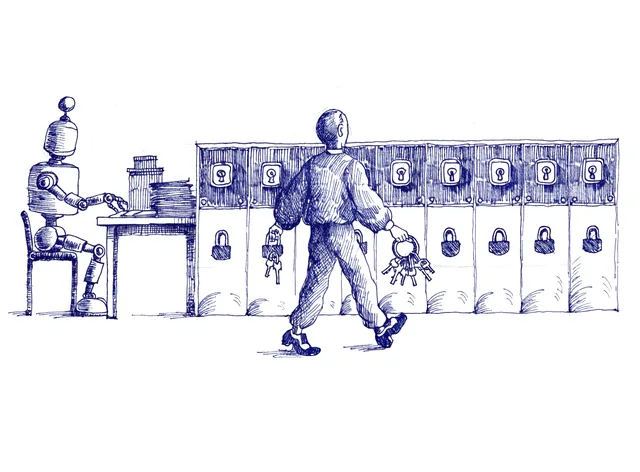
Nate B. Jones (25 Sep · 03), who writes an AI newsletter, visited OpenAI to ask why a company full of skilled AI users does not become more capable as a company. Two OpenAI leaders told him which teams took up AI first: coding, whose tools already ran on engineers' machines, then legal, whose material sat in documents the AI could open. In the words of his subtitle, "AI-native work depends less on aptitude than on access." He advises managers to check what a colleague's AI can reach before calling that colleague resistant. Most of the article is for paying subscribers, and this account covers only its opening.
Codacy (25 Sep · 04), a company that sells code-quality and code-review tools, asked two of its engineering managers how AI tools have changed their jobs. One of them, Jorge Braz, reports that a squad of three or four people now juggles up to six topics at once. The other, Alejandro Rizzo, limits how many topics each person has open, and both hold code written by AI tools to stricter standards. The piece is Codacy's account of its own staff and ends with a pitch for its products. Rizzo's advice to other managers is to watch the team's load: “Just keep an eye on this, on how stressed and overloaded your people are.”
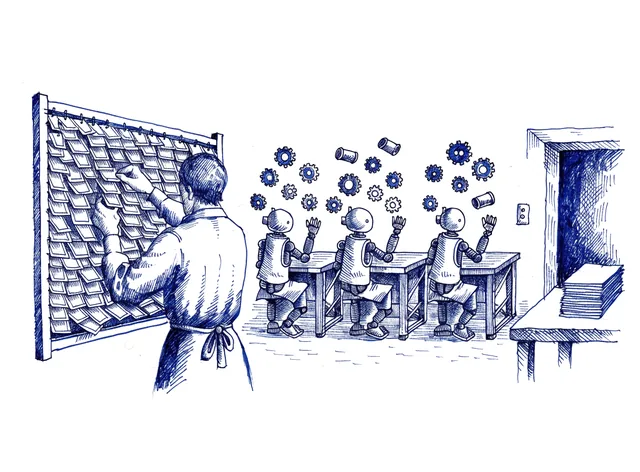
Researchers from the University of Gothenburg and Chalmers University of Technology (25 Sep · 05) studied an embedded-software company of about 20,000 employees that wants to redesign its work around AI agents. In a workshop in April 2026, 40 of its staff said they expected agents to take over much of the coding while engineers check the output. They favoured central standards with one person in each team who builds that team's agents, and warned that more generated code needs more tests and reviews. The authors say their roadmap reflects one company and has not yet been tested. In one team an agent edited the tests instead of fixing the code. A participant said engineers caught it "because we still have sharp knives in the development team."
Each piece describes something that decides the result before anyone makes a choice: a shipped default, an option dropped without a record, or a file the AI cannot open. All three authors want that input made visible, and Nielsen also wants a named person to answer for it.
Nielsen argues mostly from consumer products, where millions of users never open a settings screen, while a small team that builds with agents may already read its own skill files. Most of Jones's argument is behind a paywall, so its evidence cannot be checked.
Jakob Nielsen shows that most users keep whatever setting a product ships, and argues that AI agents hide their defaults in instruction files that need an owner.
On the podcast All Things Product, Petra Wille proposes that teams keep a visible record of rejected problems and solutions; an empty record of rejected solutions means nobody compared options.
Nate B. Jones reports from OpenAI that whether staff find AI useful depends more on whether it can reach their material than on their skill.
Two engineering managers at Codacy, a maker of code-quality tools, say AI tools let each engineer start several tasks at once, so they now limit how much work is open.
Researchers held a workshop with 40 staff at a large embedded-software company and turned their views on AI agents into a roadmap for reorganising the company around them.