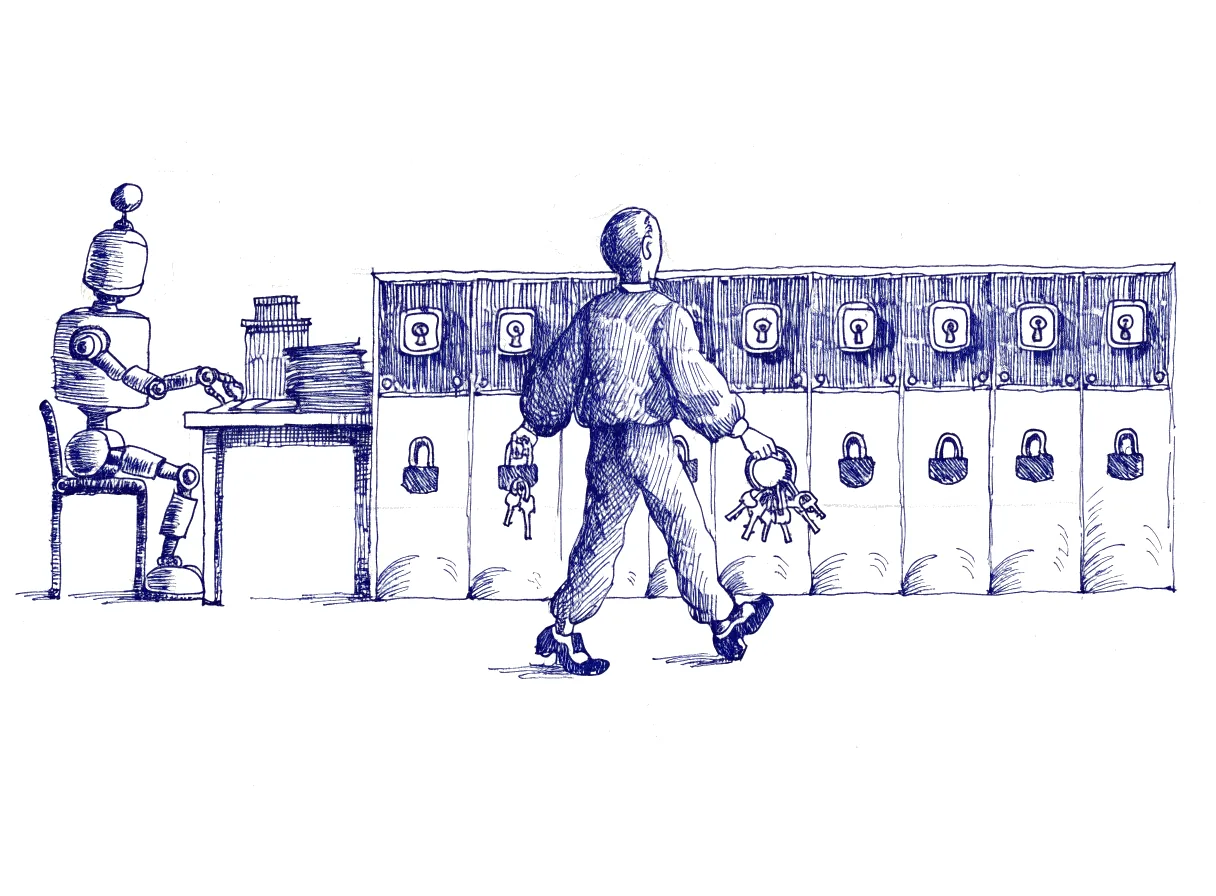
Your agent is giving you reasonable answers from half your context. A conversation with OpenAI.
Nate B. Jones · 22 September 2026
Read the originalNate B. Jones reports from OpenAI that whether staff find AI useful depends more on whether it can reach their material than on their skill.
A company can have a few very capable AI users and still not become more capable as a whole. Nate B. Jones, who writes an AI newsletter, asked two leaders at OpenAI which of its teams had come to rely on AI for much of their work. Coding came first, because its tools already ran on engineers' own machines, and legal came next, because its material sat in documents the AI could open.
- Other teams at OpenAI followed as the AI gained access to their information and got better at using it.
- Jones argues that the most consequential change comes when what one person learns improves what other people can do.
- He advises a manager to find out what a colleague's AI can reach before calling that colleague resistant.
- The article is for paying subscribers after its opening section, and this account covers only the open part.
A team that wants one person's way of working with AI to spread can start by giving everyone's AI access to the same shared material. This is an inference from the open section and is not the author's claim.
Check which shared files and systems a colleague's AI assistant can reach before concluding that the colleague resists using it.
Derived by Working Surface from the article. Source line: AI-native work depends less on aptitude than on access
25 September 2026: the defaults, the rejected options and the material an AI can reach decide results before anyone chooses.