Judgement > Output
Cate Huston · 20 October 2026
Read the originalCate Huston, an engineering leadership coach, argues that AI has made output cheap, so companies now judge people by the judgement behind their work rather than its volume.
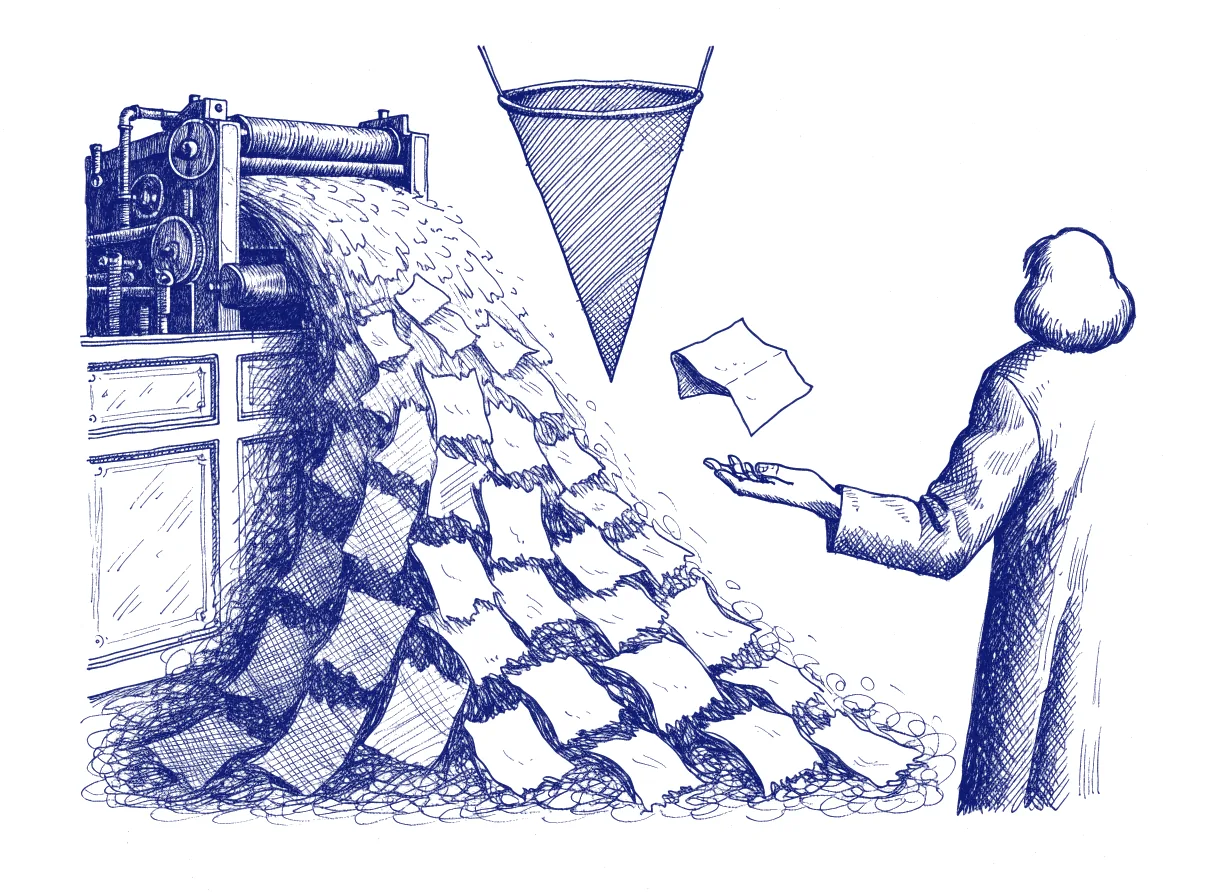
Cate Huston coaches engineering managers and writes about engineering leadership. After a season of conference conversations, she argues that the industry's rising expectations are about judgement, not output. When work was expensive, its cost stopped weak ideas; now one person with an AI tool can flood colleagues with long documents that nobody reads.
- When output was costly, teams turned down weak ideas by calling them too much work, and cheap output removes that excuse.
- Huston says low-impact work now becomes negative impact, because colleagues lose time on documents the author cannot explain.
- Most performance metrics still measure output, so they cannot show the judgement behind a piece of work.
- Teams measuring AI enablement began by counting adoption and are slowly moving to measure the impact that adoption drives.
A manager reviewing AI-assisted work can ask its author to explain the reasoning behind it, rather than counting how much was produced. This is an inference and is not the author's claim.
When an engineering manager reports on AI enablement, show how the team's delivery has changed since adoption, not how many engineers use the tools.
Derived by Working Surface from the article; more in the Playbook. Source line: So the expectation that has actually gone up isn’t output; it’s judgement.
21 October 2026: as AI tools multiply code, documents and prototypes, the work that counts moves to judging, reviewing and keeping track of what they produce.