
AI agents now produce so many code changes that teams can no longer check them the way they did when people wrote every line. Six write-ups show teams deciding which checks a machine runs, what an agent works from, and which questions a person still has to answer.
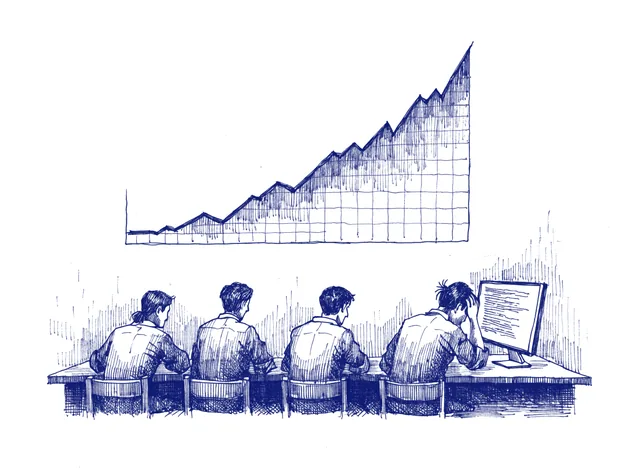
Anthropic's source control team (14 Oct · 01) describes what happened as the company's engineers handed more of their coding to Claude, Anthropic's AI model. Merged code changes rose from about 2,500 a day in May 2026 to more than 30,000 a day by September. Git, the standard version control tool, assumes each person keeps a full offline copy of the code, and it became the main thing slowing development. A team of seven built a replacement called Scion in five months. The engineers write: "Very often, we found that the role of the engineers was to tell Claude “no.”" They now review the intent of each change instead of every line.
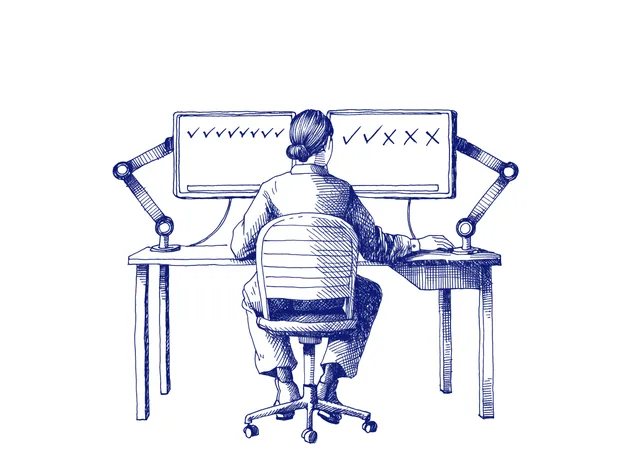
Cate Huston (14 Oct · 02), a former Google engineer who writes about engineering leadership, tested whether human code review could become an automated check that runs before a person looks. She had Claude read 4,176 review comments from twelve reviewers on an open source project and turn recurring themes into 57 checks. Replayed against about 500 recent changes, the checks found roughly 700 problems, and 71% of them had never been raised in review. She concludes that review often enforces rules the team never agreed on. In her view, one reviewer per change will not hold up once AI agents write the code.
Naresh Jain (14 Oct · 03), founder of the API testing company Specmatic, had coding agents build the same service ten times with and without a harness. The harness was a set of specifications, examples and automated tests that report failures back to the agent while it works. OpenAI's frontier AI model, GPT-6 Sol, passed all 178 independent acceptance tests every time, with or without it. The cheaper GPT-6 Luna passed in 3 of 10 runs alone and in all 10 with the harness, at about a third less cost per run than Sol. Jain concludes that the AI model's capability should decide when the tests run, and that an independent check is needed in every case.
Andrew Moedinger (14 Oct · 04), an engineer at Linear, the issue-tracking software company, describes how Linear's own teams hand recurring work to an AI agent through a feature called Loops. To clean up about 80 pieces of outdated code, he first let the agent only list candidates. Next it filed five issues at a time with a suggested owner, but assigned no one. Only then did it assign work and pass it to a coding agent, with the named engineer reviewing the result. This is the vendor's own account of its product.
Ehsān Vaeghi (14 Oct · 05) works on the design systems at Aparat, a video-sharing service with more than 60 million monthly active users. Aparat keeps three design systems, for the web, its phone apps and smart TVs, used by seven development teams. Developers copied the design-system rules into their AI coding agents by hand, so agents often read outdated or incomplete versions. The team built a server that agents query through MCP, the Model Context Protocol, and that updates within seconds of each change. Each developer's key opens only the design systems they need, and every component an agent looks for and cannot find is logged for the backlog.
Mateusz (14 Oct · 06), an engineering manager in Poland, tested whether the design system he had built changes what a coding agent writes. He had an AI agent build the same small dashboard 30 times, changing only how much of the design system it could use. With the components installed as a package, the agent stopped writing its own versions of them and added no custom styles. The same rules written out as a prose style guide made little difference. The agent copied the colours correctly from the design file but repeatedly combined them in ways that failed contrast checks for accessibility.
In each piece, a team decided in advance what a machine must check, what an agent must be given and what a person must judge. Rules that an agent installs or queries held better than rules written as prose, on the evidence of the two design-system pieces. The harder work, on this inference across the six pieces, is settling who decides contested questions, such as architecture rules, before the volume of agent-written changes arrives.
Anthropic and Linear sell the tools they describe, Aparat reports no measured results, and the numbers from Huston, Jain and Mateusz each come from one project. A team with fewer changes and weaker tests may lose more than it gains by giving up line-by-line review.
Anthropic, the AI company, replaced Git after daily merges rose tenfold with its Claude AI model, and its engineers now review each change's intent instead of every line.
Cate Huston, an engineering leader, used Claude to mine 4,176 code review comments and found that review missed most problems and enforced rules the team never agreed.
Naresh Jain, founder of testing company Specmatic, found that tests running during the build made a cheap AI model as reliable as a frontier one.
An engineer at Linear, the issue-tracking company, widened an AI agent's authority in stages before letting it assign cleanup work to colleagues.
Aparat, a video-sharing service, built a server that AI coding agents query for its design-system rules, so developers stopped copying outdated files into their agents.
Mateusz, an engineering manager, had an AI agent build one app 30 times and found that an installed design system stopped it rewriting components, while written guidelines did not.