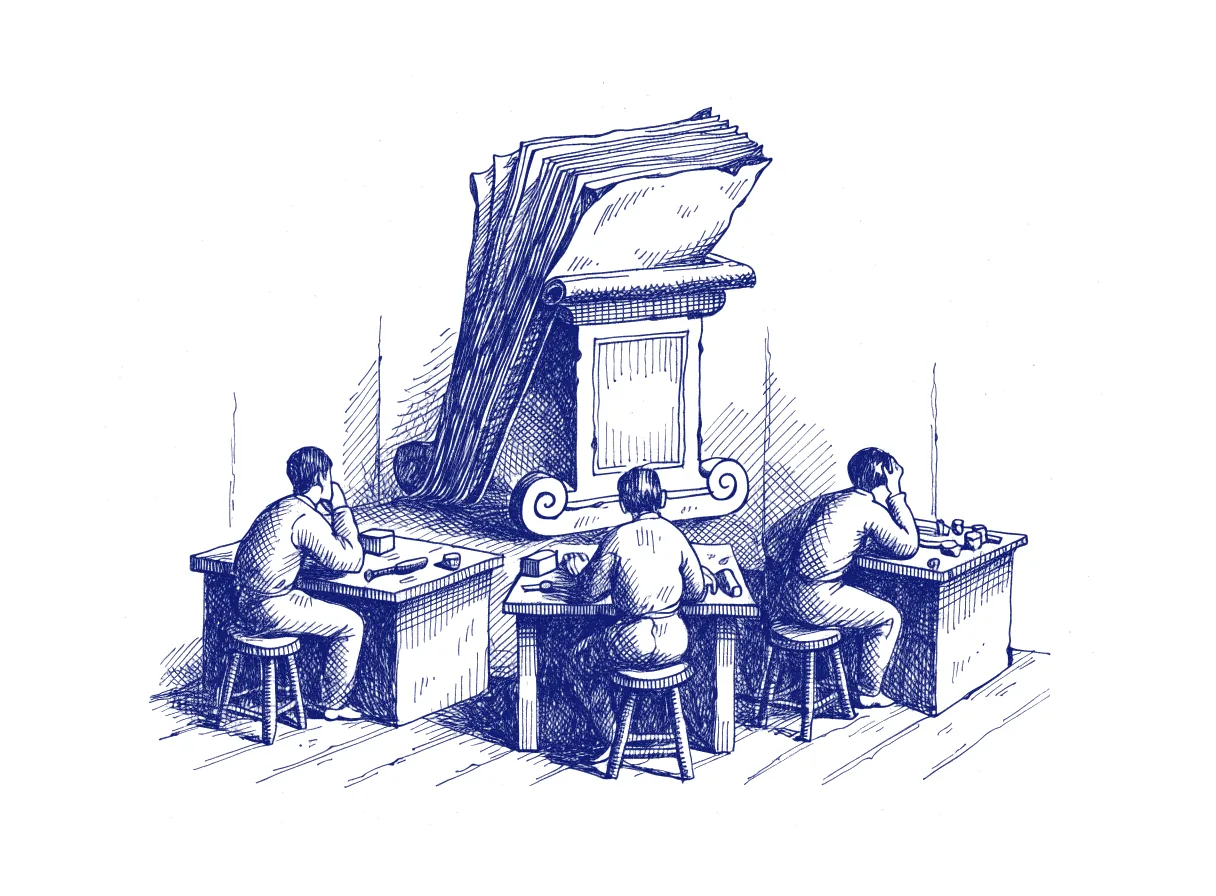
The Evolution of Software R&D Organizations in the AI Era: Abolish the Functional Split, Keep Only Three Roles
Wilson Wu · 20 November 2026
Read the originalWilson Wu, a software engineering leader, proposes replacing frontend, backend, testing, product and design teams with three roles whose rules AI agents read from the repository.
Wilson Wu, a software engineering leader who now leads AI and machine learning teams, argues on his blog that splitting software teams by skill no longer works once AI agents do most of the building. He holds that most of a requirement's time goes into waiting and handoffs between functions, which faster coding does not remove. He proposes three roles in their place: a Product Architect, Module Owners and Intent Owners.
- The Product Architect writes the product's rules as files in the repository, covering style, design tokens, tech stack, test entry and acceptance, and AI agents read them on every task.
- Each Module Owner directs AI agents to build one module end to end, from interface to release. When the agents repeat a mistake, the owner adds a rule.
- The Intent Owner replaces the product manager, writes requirements with specific acceptance criteria and accepts or returns the work after using it by hand. Wu suggests about as many Intent Owners as Module Owners.
- In his worked example, a 20-day requirement takes about 6 days. He states that this is an estimate built on assumptions, not measured data, and advises piloting one module for two to four weeks.
A team can write its test entry and acceptance rules as files its AI agents read, and name one person who accepts each module's work by hand. Wu's piece is a proposal with a modelled estimate, not an account of a team that made the change.
Write the conditions a change must meet before human testing, such as test coverage and a clear change description, in a repository file that AI agents read.
For two to four weeks, give one software module a developer who builds it with AI agents and a person who writes and accepts its requirements. Then compare lead time and rework with before.
Derived by Working Surface from the article; more in the Playbook. Source line: An organization should be designed around what is scarce, not around what no longer is.
23 November 2026: as AI agents make code and prototypes cheap, teams move faster when they decide in advance what evidence each piece of work must carry, and write it down, instead of adding review at the end.