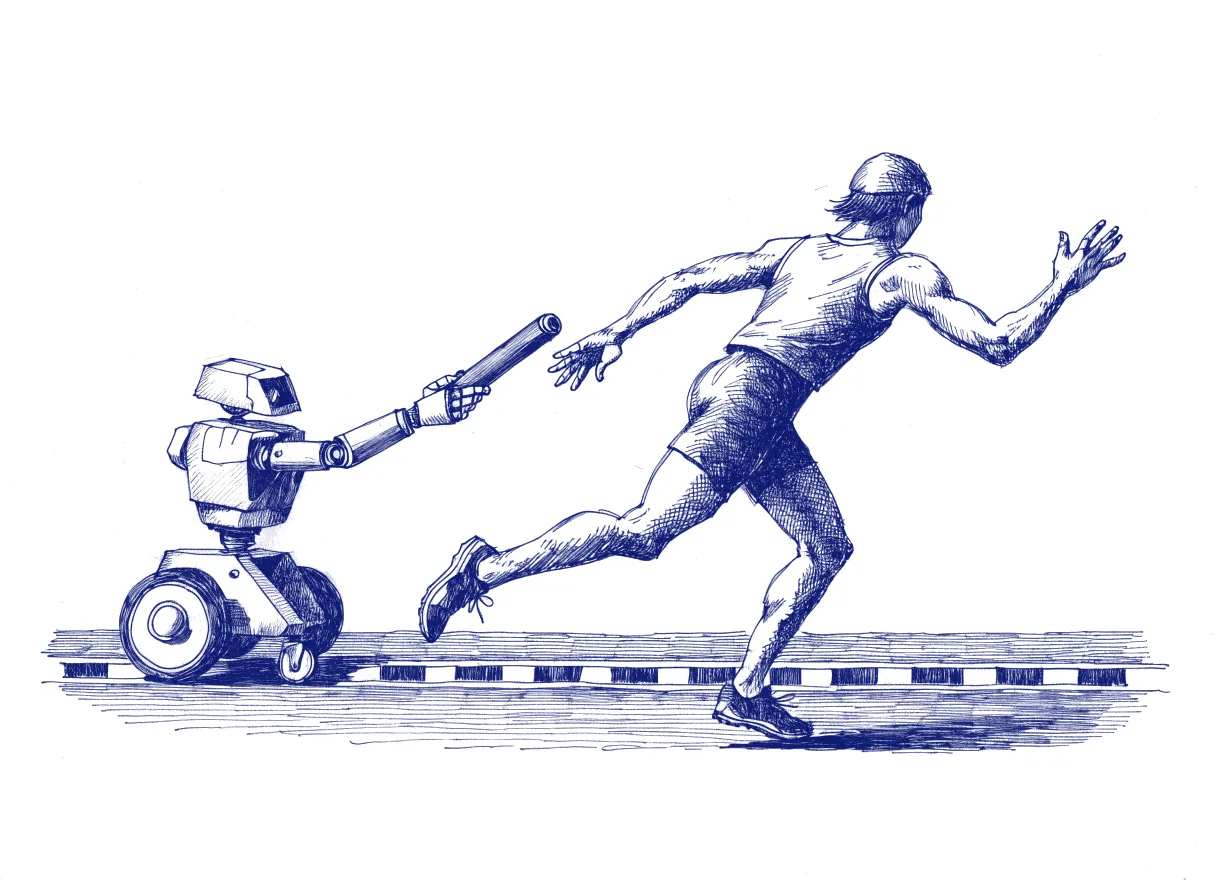
Experience Design: Dropping the “User” from “User Experience”
Raluca Budiu · 30 October 2026
Read the originalRaluca Budiu of Nielsen Norman Group argues that design must now cover AI agents acting for people, because some flaws appear only where a task passes between the two.
Raluca Budiu works at Nielsen Norman Group, a user experience research firm, and once doubted its change of job titles to "experience specialist". Budiu now accepts the name because personal AI agents may use a company's product in place of the person. The article defines experience design as covering people using products, agents using systems for people, and the two working together.
- A journey used to cross channels. It can now also cross actors, because an agent may shop, book or cancel without the person visiting the company's product.
- The measure of success stays with the person: an agent-facing banking system must still protect the financial safety of the people behind the agents.
- In one example an agent recommends a flight and asks the person to log in through its own browser, where the person's password manager is missing. The flaw shows only when both are studied together.
- Agents cannot be interviewed or usability tested in the usual way, so researchers may need to vary their context, instructions and tools, and to inspect log traces.
A product team whose users delegate tasks to AI agents can review the points where work passes between person and agent, not only each side alone. That reading is an inference and is not the author's claim. The piece is a definition and one illustrative example, not a study.
Run a usability study of a task that an AI agent starts and a person finishes, and check whether information, logins and progress carry across the handoff.
Derived by Working Surface from the article; more in the Playbook. Source line: The ultimate criterion of success for an experience is whether the human achieved their goals.
31 October 2026: as AI agents produce more of the work, teams move the checking to the people and records closest to the real output.