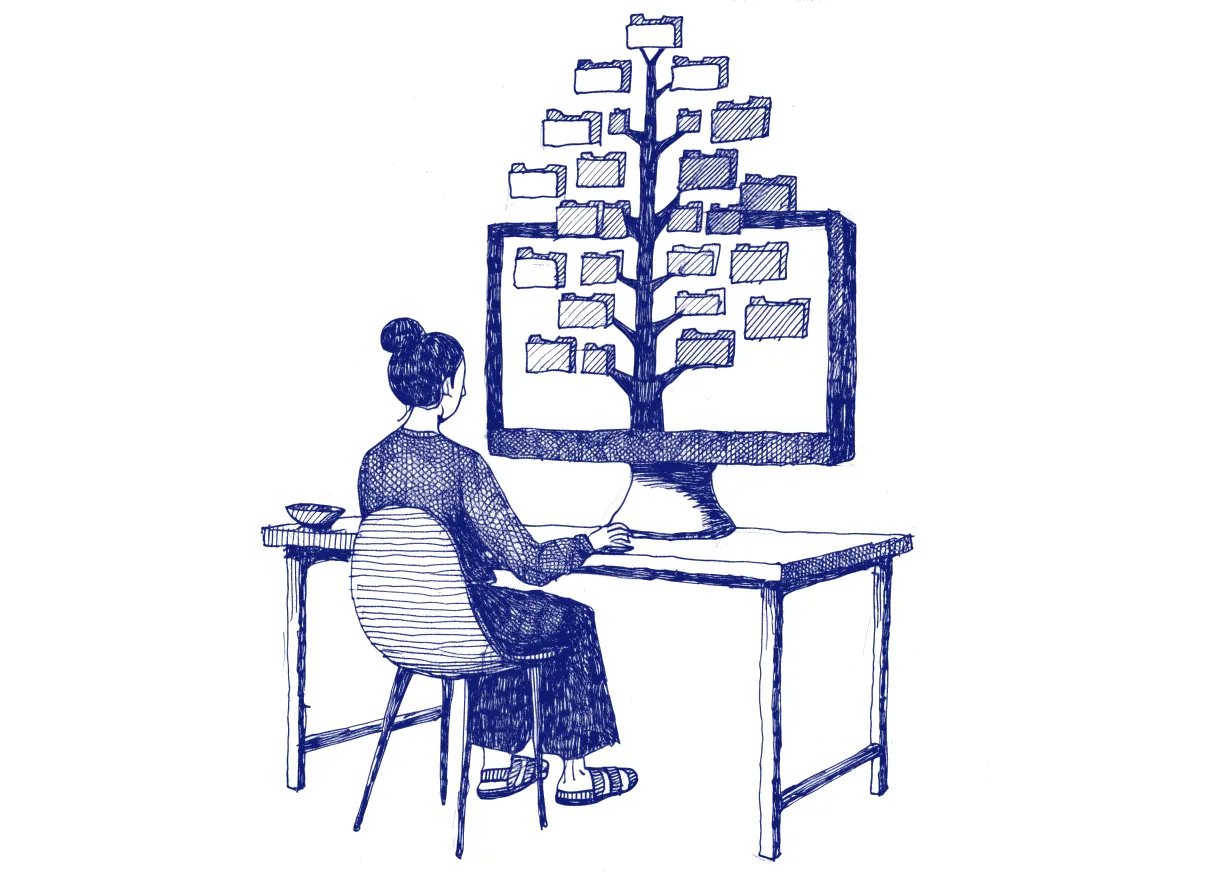
Context Libraries: How AI Power Users Manage Context Engineering
Tanner Kohler · 9 October 2026
Read the originalNielsen Norman Group researcher Tanner Kohler found that expert Claude users let the AI agent edit their context files and rarely checked the changes, so the files went stale.
Tanner Kohler of Nielsen Norman Group, a user-experience research firm, studied expert users who work with Claude, Anthropic's AI assistant, every day. Each kept a library of context files that an AI agent reads before a task. The study found files that no longer matched how people worked, broken connections to other tools, and agent-made files that their owners did not know about.
- Almost no participant typed into their context files directly; they asked the agent to make edits, often across many files at once.
- One participant used a context file for months after it stopped matching how he worked.
- Participants who shared a library with colleagues usually kept it in Google Drive; a few considered GitHub, but none adopted it.
- Kohler recommends a regular audit in which the agent compares recent sources, such as meeting transcripts, with the library and a person approves its suggested updates.
A team that shares context files with an AI agent can schedule the audit Kohler describes and name the person who approves the changes. Applying a study of individual users to teams is an inference and is not the author's claim.
Schedule a regular review in which the AI agent compares recent meeting notes with its context files and a person approves each suggested update.
Put a short index file in each folder of context that says what the folder holds and when the agent should use it.
Derived by Working Surface from the article; more in the Playbook. Source line: Context libraries must evolve to remain useful, but unlike humans, they can’t adapt on their own.
11 October 2026: AI agents depend on written context that goes stale, and the teams in these pieces review agent changes more firmly than they keep that context current.