What it takes to build great products now
Paige Costello · 24 September 2026
Read the originalPaige Costello, vice president of product at Figma, argues that AI makes prototypes quick, so the hard work moves to choosing a direction, finishing the product and making it distinctive.
Paige Costello is vice president of product at Figma, the company that makes the design tool of the same name. She writes that AI lets a team build a clickable prototype within hours, yet the prototype does not show whether its direction is the best one. Her post on Figma's blog sets out how teams keep their speed until launch, compare directions and make a product distinctive, and recommends Figma's own tools at each step.
- Costello observes that when the first 80 percent of the work is easy, teams can lose momentum in the last 20 percent. A quick prototype already feels ready to launch.
- A quick prototype may not use the team's design system, or may create extra work when it moves into code.
- She advises building out the cases a single prototype hides. In a salon-booking flow, these include a week with no free slots, a cancelled stylist and a customer who needs to reschedule.
- She argues that a design system which records a product's choices, such as its colours and spacing, lets AI-generated work follow them instead of falling back on generic defaults.
A team that prototypes with AI can set aside time to work through edge cases and compare several directions before committing to one. The post is a vendor's account that recommends its own products throughout, and it reports no results from teams that followed the advice.
Before choosing a direction from an AI prototype, build out the states it leaves out, such as a cancelled booking, to see whether the direction still holds.
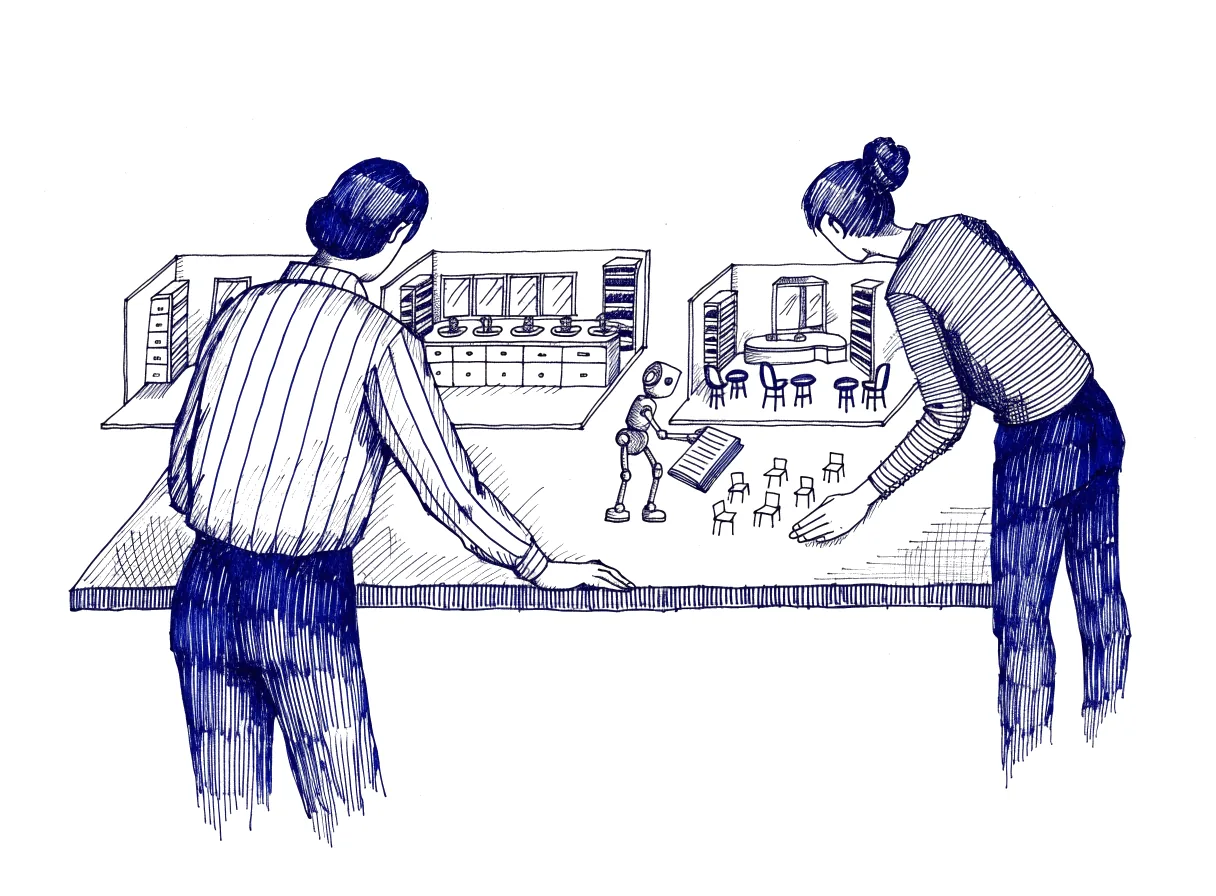
Place several prototype directions side by side where the team can compare and discuss them, instead of judging one prototype on its own.
Derived by Working Surface from the article. Source line: A single prototype hides the branches, the empty states, and the awkward transitions where even a promising concept can create problems in practice.
30 September 2026: when building gets cheap, teams spend the effort on checks, tests and choosing a direction.