AI makes critical thinking harder to build
Mia de Búrca · 29 September 2026
Read the originalMia de Búrca, a staff engineer at Vistaprint, argues that AI tools spare junior engineers the struggles that built their judgement, so leaders should make room for that practice.
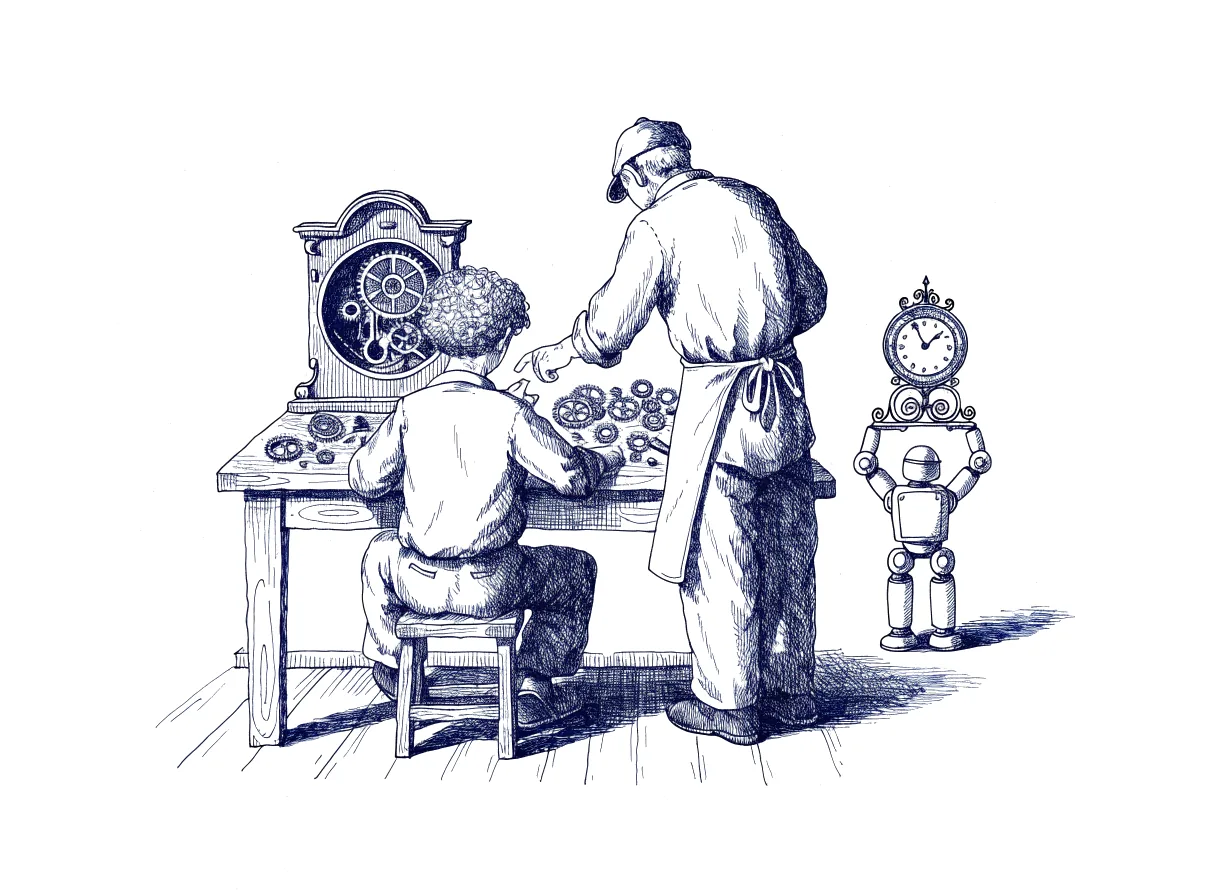
Mia de Búrca is a staff engineer at Vistaprint, the online printing company. Junior engineers used to learn judgement by struggling with unfamiliar code and explaining their reasoning to senior colleagues. She argues that AI assistants now smooth much of that away, and that juniors who doubt their judgement defer more to generated answers.
- She asks leaders to say plainly that critical thinking is part of the job. The team should define it, so that it comes up in onboarding, feedback and reviews.
- She wants engineers to feel safe saying that they do not understand what an AI tool generated.
- She would build the skill through existing practices. Pull requests would explain why a change was made and which alternatives were rejected. Incident reviews would ask what the team believed that turned out to be untrue.
- She suggests coaching juniors to ask an AI assistant to challenge their assumptions, and writing critical thinking into career frameworks as specific behaviours.
De Búrca argues that the work a junior engineer ships no longer shows whether the engineer is learning to judge it. The piece is one engineer's advice without data, and its use for any particular engineering team is an inference.
Run incident reviews that ask what the team believed that turned out to be untrue, so that junior engineers practise judging their own assumptions.
Write critical thinking into career frameworks as specific behaviours, such as validating assumptions before implementation, so that managers can see a junior engineer's growth that shipped tickets no longer show.
Derived by Working Surface from the article. Source line: Postmortems that ask not just “what broke?” but “what did we believe that turned out not to be true?”
29 September 2026: when AI tools do the making, a team has to keep some of the old steps on purpose.