Durable Agentic Teams: Maximizing Your Software Development Workflow
Jonah Turnquist · 29 September 2026
Read the originalJonah Turnquist, chief technology officer of the property-planning software company PropCode, organises his AI coding agents like an engineering team, and finds that his own review time becomes the limit.
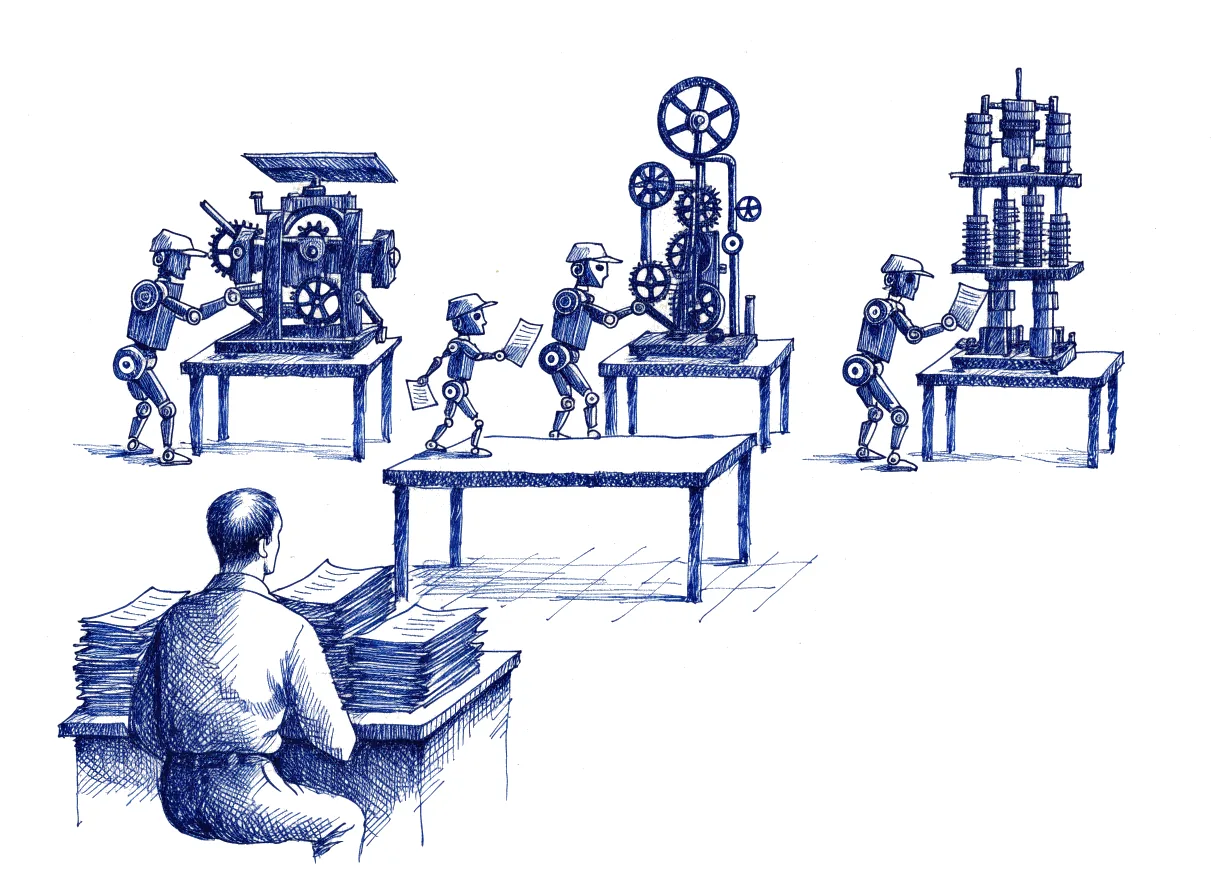
Jonah Turnquist is co-founder and chief technology officer of PropCode, which analyses planning regulations for Australian properties. Running several AI coding agents on parallel projects, he found himself passing messages between them so that they would not contradict or repeat each other's work. He now organises them as a team: one manager agent that only coordinates, and one agent per project that owns it from design to pull request.
- He splits work by project instead of by frontend and backend, so each agent holds the decisions for one feature and agents rarely need to brief each other.
- He sets written rules on what agents may do alone, such as committing and opening pull requests, and what waits for him, such as merging and deploying.
- A separate agent checks every hour for new review comments and forwards each one to the agent that owns the pull request. Agents sign every comment they post.
- In his experience the team uses about as many tokens as a single agent doing the same work. What grows is his review load, which he eases with an AI code reviewer.
An engineering team that runs several AI agents at once can give each agent a whole feature and write down which actions wait for a person. This wider application is an inference and is not the author's claim; the account comes from one company.
Write down early which actions AI coding agents may take without asking, such as committing and opening pull requests, and which wait for a person, such as merging and deploying.
Give each AI coding agent one whole feature, from interface to storage, instead of one layer such as the frontend, so that agents seldom need to brief each other.
Derived by Working Surface from the article. Source line: Can agents commit, push, open pull requests, merge or deploy without asking? Settle these rules early, and have your engineering manager agent write them down.
29 September 2026: when AI tools do the making, a team has to keep some of the old steps on purpose.