DHH's Rails World 2026 Keynote: Pencils Down, Now What
Jared Smith · 24 September 2026
Read the originalEngineering leader Jared Smith argues that when AI agents write the code, a person must still own how the changes fit together, which a better model will not fix.
David Heinemeier Hansson created the web framework Ruby on Rails and co-founded 37signals, the company behind Basecamp and the email service HEY. At the Rails World 2026 conference he said that 37signals now writes code by hand only as an exception. Jared Smith, a founder and engineering leader, wrote up the keynote and agreed with much of it, but disputed one lesson.
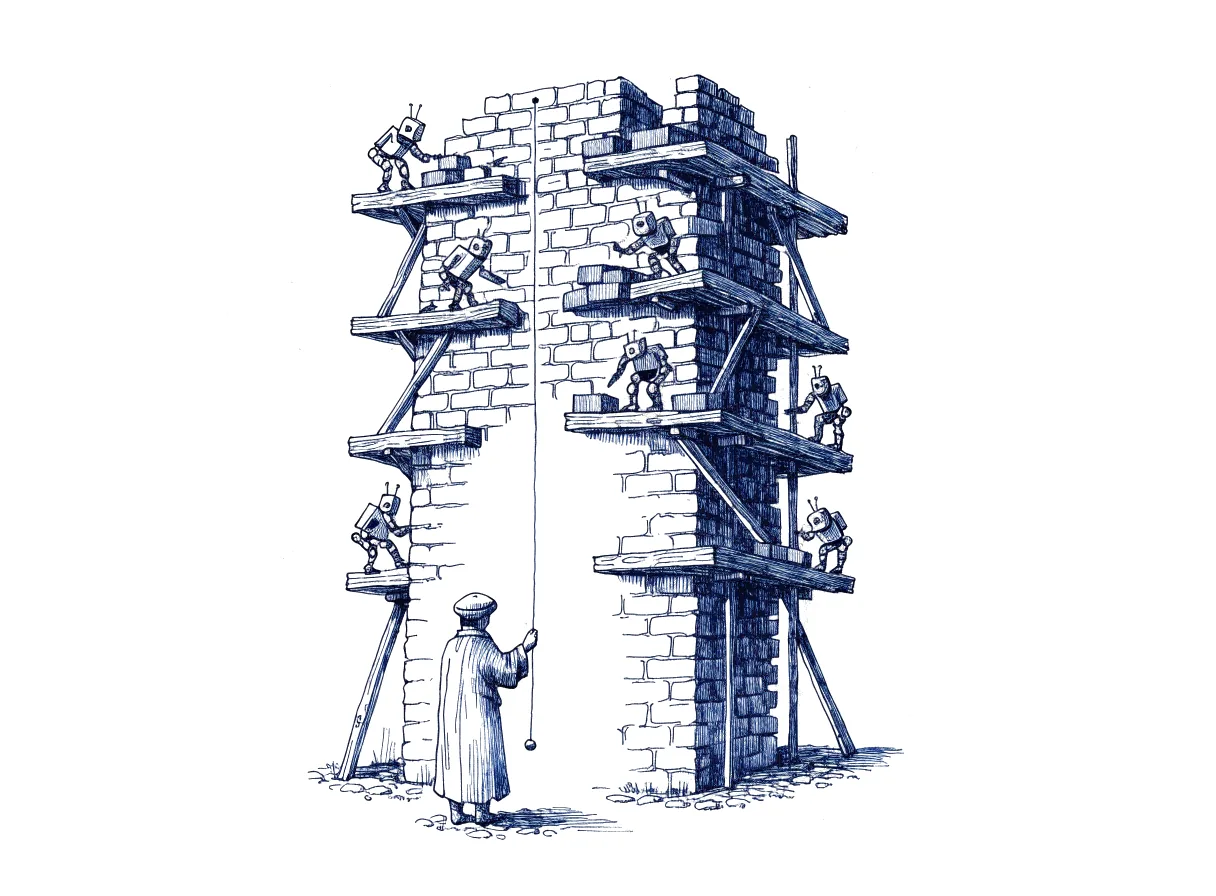
- This spring, 37signals designers built the final features of Basecamp 5 with AI agents. Each change looked reasonable, but twenty or thirty together left the architecture, in Hansson's words, "a little like a Swiss cheese."
- The team went back to reviewing code by hand. Hansson called that the wrong conclusion and said a better AI model would have made the original plan work.
- Smith argues that nobody owned how the changes added up, and that a better model does not fix a problem of ownership. The more code agents produce, the harder that problem gets.
- Smith's rule is to keep a person explicitly responsible for the architecture.
A team that lets agents write code can name one person responsible for how the pieces fit together. Smith states this rule for code, and its application to design work is an inference and is not his claim.
Make one person responsible for how an AI-built product fits together as a whole, and have that person check that each new change fits.
Derived by Working Surface from the article. Source line: Someone still has to own the code nobody reads, and the thing that created that job won't be the thing that does it.
28 September 2026: when agents build, people keep the first screen, the review, the files agents read and the whole product.